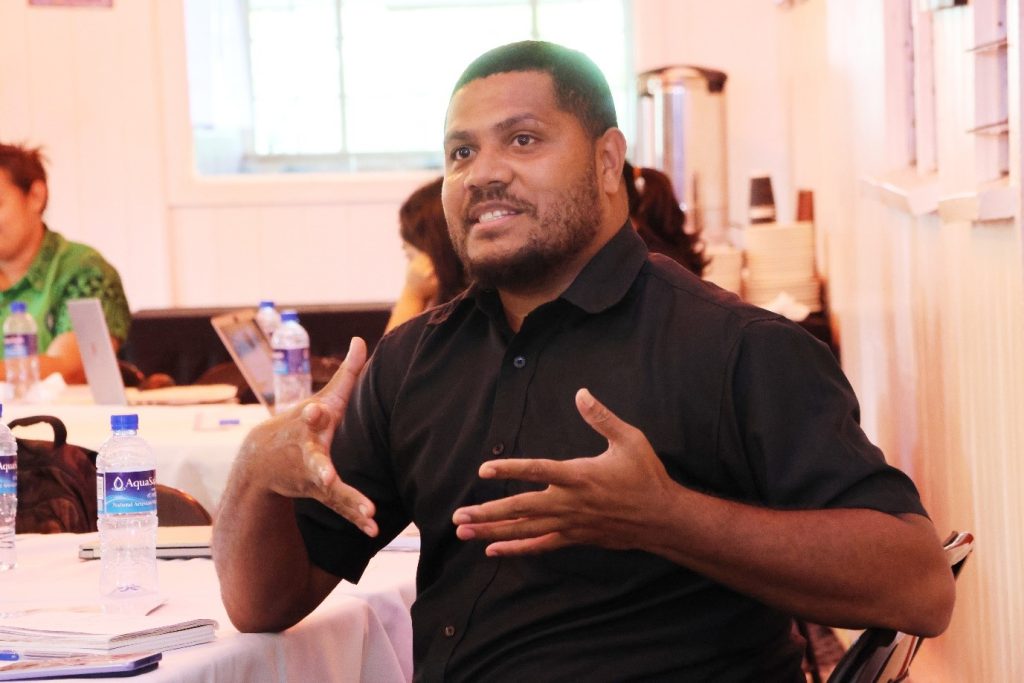
Villagers learn Bee Keeping under EU funded project
EU Ecosystems-Based Climate Adaptation Project (ECAP) successfully launch the Beekeeping Training in Nakasa Village in Cakaudrove. This is being done through an initiative under the EU funded Ecosystem-based Climate Adaptation Project. The Basic Beekeeping Training will be undertaken in 20 communities in the Northern Division, seven in Bua, three in Macuata and 10 in the […]
The European Union and Live & Learn build socio-economic resilience to climate change in the northern communities of Fiji
ECAP is a targeted 3-year development intervention (2020-2022), implemented by Live & Learn Environmental Education Fiji, with a funding of FJD 1.62 million. Its overall objective is to build local socio-economic resilience to climate change in vulnerable communities in the Northern Division of Fiji. ECAP targets 75 villages in the Provinces of Cakaudrove, Bua and […]
Eighty-eight-old Miriama Cawaki lives alone with her grandchildren in their Sadroa home in Serua. While she depends on her Social Welfare assistance to support their livelihood, the COVID-19 crisis brought about many challenges as the confinement prevented them from accessing necessities. It was during this difficult situation that the Australian Humanitarian Partnership (AHP) distributed dignity […]
The Ministry of Rural and Maritime Development and Disaster Management, through the National Disaster Management Office (NDMO), received nine computer sets worth $30,000 from Live and Learn Fiji and Care Australia last week to boost future disaster response operations in the Northern Division. Acting Prime Minister and Minister for Rural and Maritime Development and Disaster […]
NDMO receives $21k worth of media and training equipment
The National Disaster Management Office (NDMO) received media and training equipment from Live and Learn worth $21k. This is expected to assist the NDMO’s office on preparedness and response to natural disasters. Director for NDMO Vasiti Soko said this assistance would allow their officers to create more quality content and increase awareness on preparedness and […]
Fiji Advances Infrastructure Resilience with IRIS Partnership
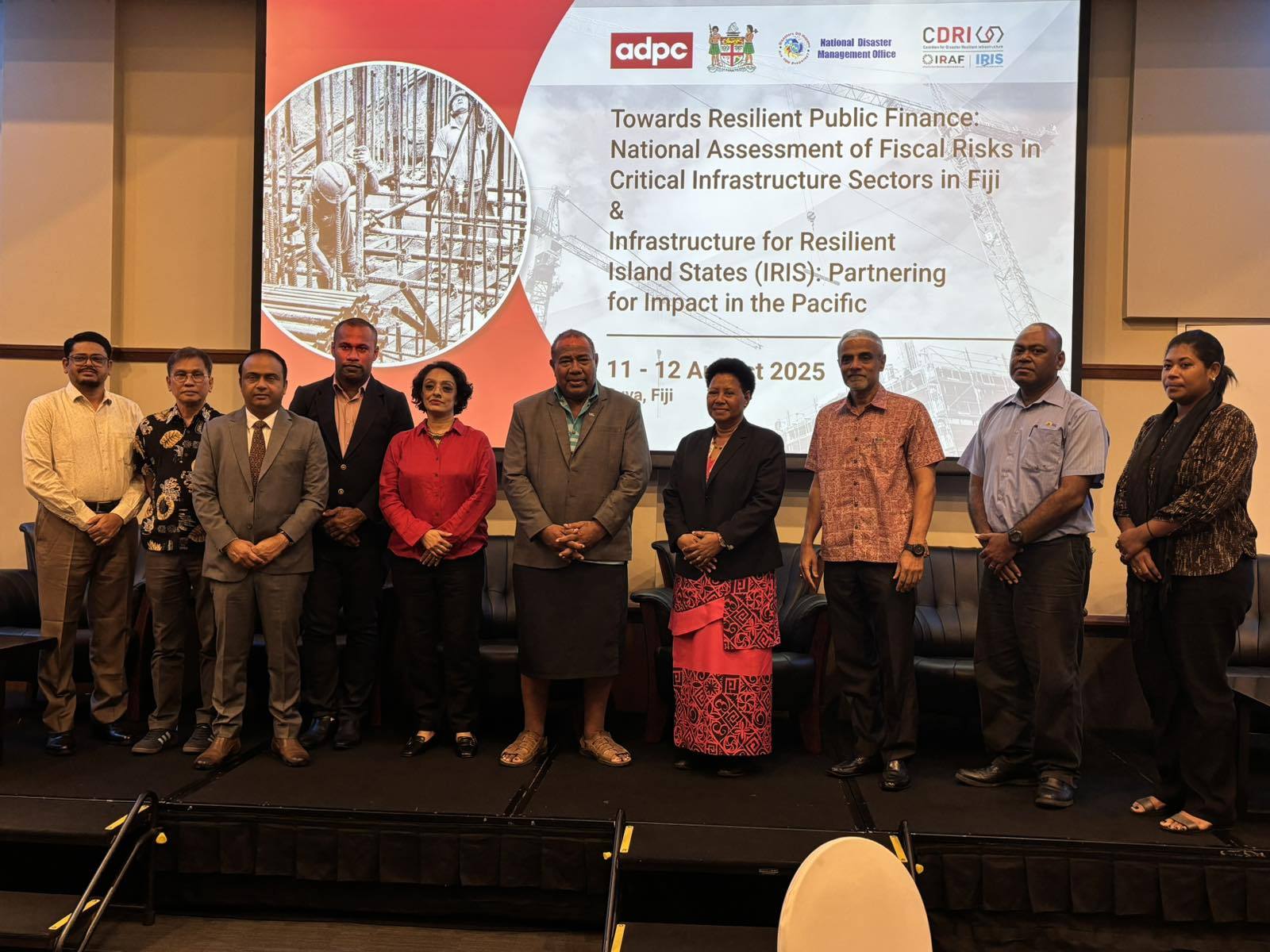
The Permanent Secretary for the Ministry of Public Works, Meteorological Services and Transport, Mr. Paula Baleilevuka, has called for stronger collaboration, innovative financing, and community-driven action to strengthen Fiji’s infrastructure resilience against disasters. Speaking on the second day of the National Workshop on Assessment of Fiscal Risks Due to Disasters in Critical Infrastructure Sectors, Mr. Baleilevuka […]
Kiwa EMPOWER brings hope to remote Islands in Solomon Islands
Two small island communities in Solomon Islands will benefit from the Kiwa Empower project officially launched yesterday. Nifili Island in Temotu Province and Sikaiana Island in Malaita Province are the two sites where the project will work with stakeholders to strengthen nature based solutions (NbS) aimed at inclusive and equitable climate change adaptation, food and […]
The Kiwa Initiative launched its EMPOWER project with support from Australia and other donors in Solomon Islands on 24 June. The Kiwa EMPOWER project will restore ecosystems and improve the health of waterways to increase climate resilience in two remote communities: Sikaiana in Malaita Province and Nifiloli in Temotu Province. In Solomon Islands, the EMPOWER […]
Agriculture Ministry partners NGO to aid community
Live and Learn Fiji has joined forces with the Ministry of Agriculture to assist residents of Mataniborosisi Settlement in Lami in addressing the impacts of climate change. According to the non-governmental organization, the residents’ farming areas are being inundated with seawater during high tide due to coastal erosion and rising sea level. Live and Learn […]
Empowering Pacific Parliaments through Floating Budget Office
What is a Floating Budget Office? In the vast expanse of the Pacific, an innovative initiative that continues to revolutionize how parliaments analyze and understand their national budgets. The Floating Budget Office (FBO) is empowering Pacific nations to make more informed decisions about their financial futures. But what exactly is the FBO, and how is […]
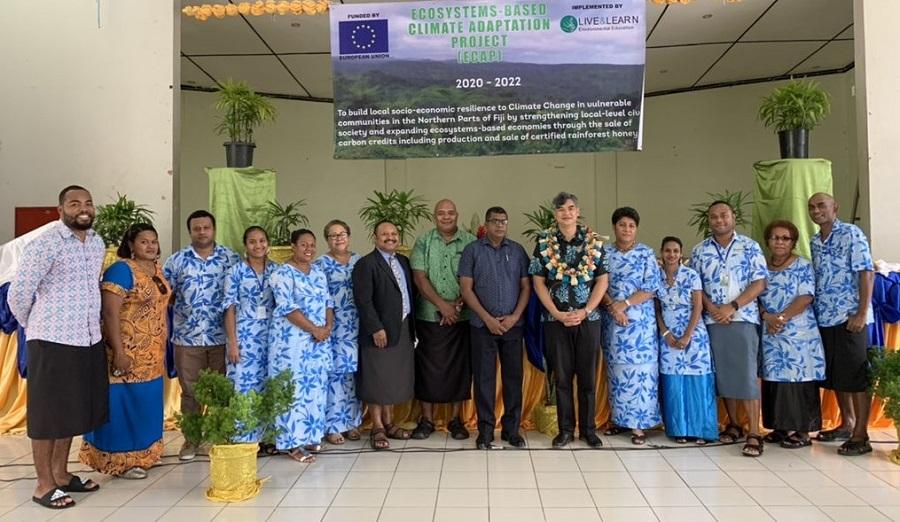
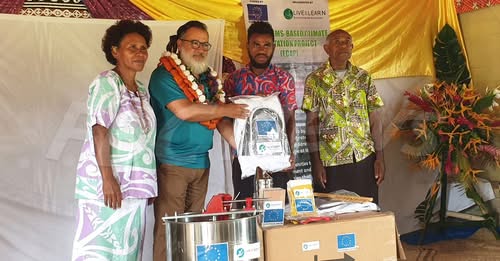
EU Ecosystems-Based Climate Adaptation Project (ECAP) successfully launch the Beekeeping Training in Nakasa Village in Cakaudrove. This is being done through an initiative under the EU funded Ecosystem-based Climate Adaptation Project.
The Basic Beekeeping Training will be undertaken in 20 communities in the Northern Division, seven in Bua, three in Macuata and 10 in the Cakaudrove Province
Delegation of the EU for the Pacific Head of Section Civil Society, Pedro Velazquez launched the project and the training on Tuesday.
ECAP is a targeted 3-year development intervention (2020-2022), implemented by Live & Learn Environmental Education Fiji, with a funding of FJD 1.62 million. Its overall objective is to build local socio-economic resilience to climate change in vulnerable communities in the Northern Division of Fiji. ECAP targets 75 villages in the Provinces of Cakaudrove, Bua and Macuata and aims to benefit an estimated 71,000 Fijians. It focuses on communities that are vulnerable and activities that are responsive and inclusive to community priorities while being reinforced and well supported by national processes.
The key drivers for socio-economic resilience for this action are the generation and sale of carbon credits and the establishment of village-based honey cooperatives that produce rainforest certified honey. These drivers will be enabled through the protection of forest ecosystems which are vital for carbon capture and slowing down climate change.
“Building climate resilience in the Northern Division of Fiji with this Ecosystem-Based Climate Adaptation Project also provides local communities with a welcome source of income at the time of the COVID-19 crisis. It is fully in line with the European Green Deal, which remains the top priority of the European Union. It is consistent with the EU approach, to build strong partnerships between governmental authorities, civil society organisations and local communities” said Ambassador Seam.
Moreover, it must be highlighted that the EU supported the first independent project in Fiji for Forest Carbon Capture and Trade, the Drawa Forest Carbon Project, that gained Government’s approval and was developed by Live & Learn and the Nakau Programme. In Drawa, landowners gave up rights to logging timber in exchange for the opportunity to sell rainforest carbon credits as a way of generating revenue for local economic development and building resilience to climate change. The project is officially recognised as a pilot activity and has assisted the Government develop its national REDD+ Policy. Based on this successful intervention, the EU is funding this second large-scale carbon credit project in partnership with the Government and with a view of preserving the ecosystems of vulnerable climate communities in Fiji. Live & Learn is well placed to adapt and replicate the Drawa model at an appropriate scale in Fiji, in collaboration with the national programmes and governmental priorities on climate change and REDD+ issues.
The ECAP project will also promote and advance gender equity and social inclusion through socio-economic resilience. It will take a strength-based approach that acknowledges existing systems and resources in the local community and adds value to these. Moreover, it will support youth participation in local climate resilient economies, climate change decision-making and climate change leadership.
ENDS
Media Contact:
For further information, please contact the Project Manager at Suva Head Office 52 Imthurn Road, Domain. Private Mail Bag, Suva. Tel: (679) 331 5868; or the Senior Project Officer at Northern Office Lot 4, Naiyaca Sub-division, Labasa, Fiji. Tel: (679) 881 8855
Eighty-eight-old Miriama Cawaki lives alone with her grandchildren in their Sadroa home in Serua.
While she depends on her Social Welfare assistance to support their livelihood, the COVID-19 crisis brought about many challenges as the confinement prevented them from accessing necessities.
It was during this difficult situation that the Australian Humanitarian Partnership (AHP) distributed dignity kits through its partner Live and Learn Environmental Education Fiji (LLEE) to 1000 people to meet their protection needs.
Dignity kits contained hygiene and sanitary items, as well as other items explicitly tailored towards the local needs of women and girls of reproductive age in particular communities.
Generic hygiene kits help people improve cleanliness.
While dignity kits are similar to basic hygiene kits often distributed at the onset of emergencies, dignity kits serve a broader purpose and so contain a wider range of items.
Dignity kits help women and girls maintain their dignity during humanitarian crises.
A key item in the dignity kit distributed by LLEE is the reusable sanitary pads.
The kit contains a bucket with a lid, sanitary pads, reusable sanitary napkins, panties, bathing soap, washing soap, solar light and COVID-19 messaging.
Also included are Gender Based Violence leaflets. “Na bula i nakoro e sega ni rawarawa ena noda saga me da vaqara na bula. Na vurevure ni ilavo e dredre me voli kina na veika lalai eda gadreva kau vakavinavinaka ena veivuke e yaco mai ni veisotavi saraga kei na neimami gagadre. Na sovu e vukei au saraga ena noqu savasava ena veisiga (Getting access to basic necessities is quite hard in the village because we do not have a good source of income. I am thankful that when we received our assistance, we were really in need and I got my supply of washing soap to help with the laundry),” Mrs Cawaki said.
Mrs Cawaki said the sanitary pads and reusable sanitary napkins would be used by her granddaughters.
She commended LLEE for this great idea, saying that it suited village life.
“Sa dredre na bula na ilavo madaga e rawa sa vakayagataki ena kakana ka sega ni vagolei ena voli nodra yaya ni tataqomaki na makubuqu (Life is hard and whatever money we receive we use it to buy food. We no longer have to buy sanitary pads now for my granddaughter with the reusable ones received).”
She also decided to give the bucket to her daughter in Beqa who had just given birth when the assistance arrived.
Ema Maimai, 64, is also thankful for the assistance. She owns a washing machine, but because life is hard in the village she utilised the washing soap to wash her clothes using the machine.
“Au se vakayagataka tikoga qo na noqu sovu. Au dau tonia ena sovu me malumu qai sava ena misini (I am still using the washing soap that was given. I soak my clothes with soap before loading it in the washing machine using the soap water to wash them).”
Ms Maimai was also grateful for the solar light that will be used in times of blackout and would come in handy during as we enter the new cyclone season.
She revealed that she was safely keeping the reusable sanitary napkins to be used by her 11-year-old granddaughter when she has her menstruation.
The AHP, through LLEE, distributed dignity kits and MHM reusable products and awareness to girls in schools, including COVID-19 messaging and GBV in the Central Division focusing on the province of Serua and Rewa.
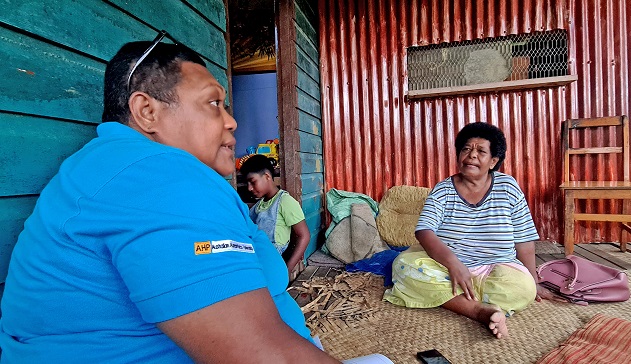
Ema Maimai shares her story with AHP MERLI Technical Support Officer Paulini Vakacegu . Picture: SUPPLIED
The initial target was 500 and now increased to 1000 beneficiaries.
AHP WASH project officer for Live and Learn, Litiana Dimaopa said preserving dignity was essential to maintaining self-esteem and confidence, which is important to cope in stressful and potentially overwhelming humanitarian situations, thus the distribution of dignity kits during the COVID-19 crisis.
She said supporting women’s self-esteem and confidence also assisted them in providing care and protection to their children.
“Dignity kits focus on promoting mobility and safety of women and girls by providing age, gender, and culturally appropriate garments and other items in addition to sanitary supplies and basic hygiene items. Dignity kits are designed in partnership with affected communities to ensure the most appropriate items are included, and distribution is carried out in a manner that minimises the risk of GBV against women and girls,” Ms Dimaopa said.
According to Ms Dimaopa, dignity kits help women and girls by:
Contributing to the psychosocial and physical wellbeing of women and girls, by including items such as intimate wash and pads.
Improving mobility of women and girls by providing specific sanitary items. In some contexts, mobility can also be enhanced by including items such as headscarves or abaya, without which women cannot be seen in public.
Allowing budget substitution for families to purchase other important items, such as food.
Contributing to the protection of women and girls, by including items such as solar lights, so that women and girls do not have to walk in the dark and can call for help.
Providing information about hygiene, reproductive health, GBV related issues, and services though the inclusion of health and protection information.
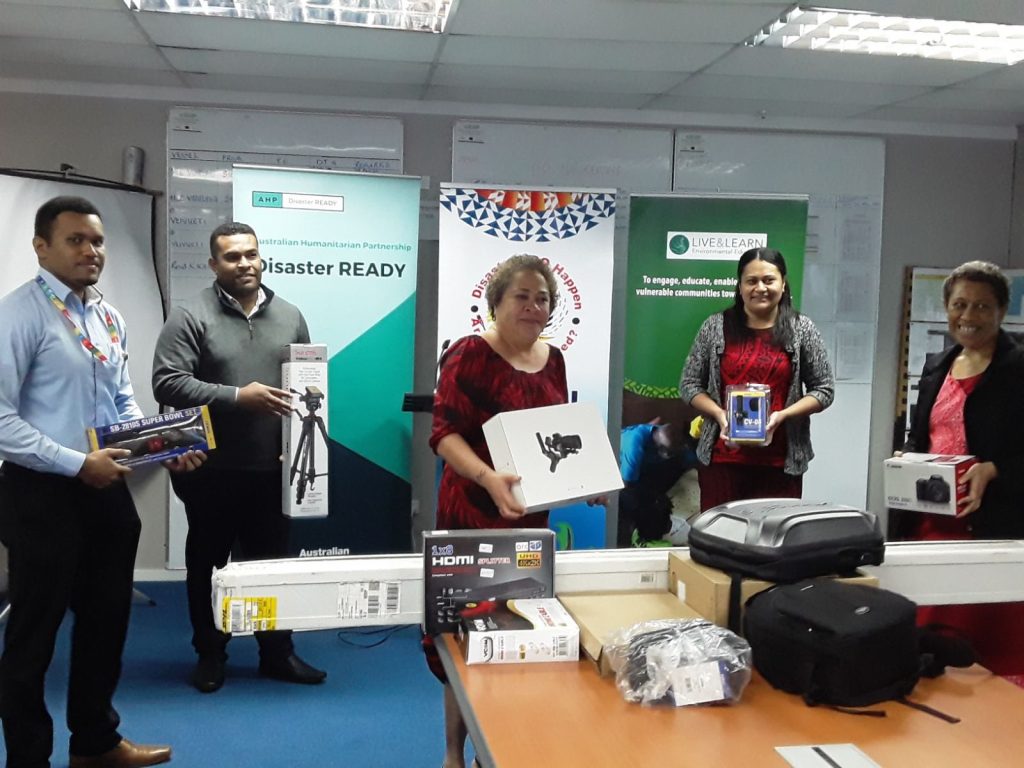
The Ministry of Rural and Maritime Development and Disaster Management, through the National Disaster Management Office (NDMO), received nine computer sets worth $30,000 from Live and Learn Fiji and Care Australia last week to boost future disaster response operations in the Northern Division.
Acting Prime Minister and Minister for Rural and Maritime Development and Disaster Management Inia Seruiratu received the handover certificate of the items which have been shipped to the North.
He said the computers would be used to complement the high frequency radio systems which were being installed in several black spot areas in the Northern Division.
“Such thoughtful actions are commended and the benefits, I must say, that will not only be a huge boost to the 9HF radio capabilities in the Northern Division but, more importantly, service delivery component – communication – of the ministry during disasters,” he said.
“The greatest advantage of these HF radios is its capability to make communications in long distance stations between the ground level and base emergency operation centres during disasters, and also its reliability to communicate even when the network has been altered or communication towers damaged.
“Now, with the capacity of the 9 new desktop computers, the HF radios can be connected to these computers and they also have the ability to send emails.”
He said such timely support was a boost to their communication systems before, during and after disasters and this act of generosity marked a clear direction to fulfilling the 2030 Global Agenda of reaching the furthest first and leaving no one behind.
In his remarks during the handover ceremony, AHP (Australian Humanitarian Partnership) Fiji country committee coordinator 2021 Josefa Lalabalavu said its partners appreciated the support and partnership of the ministry and NDMO and looked forward to more opportunities for collaboration.
“This, we believe, will support preparedness activities within the Northern Division as well as facilitate response work during times of natural disasters,” he said.
Source: Fiji Times
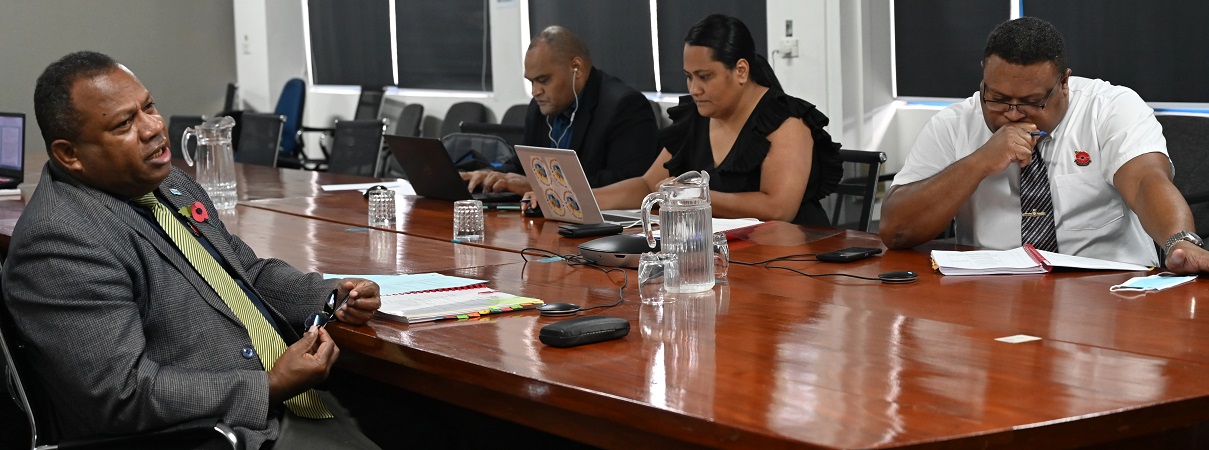
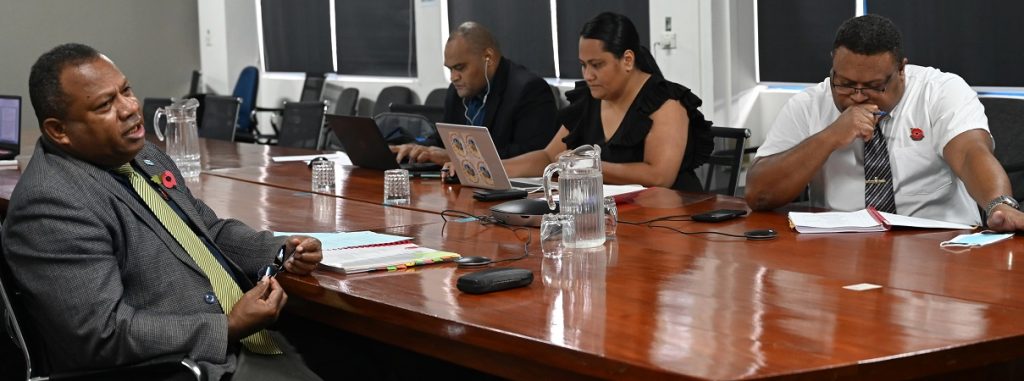
Acting Prime Minister and Minister for Rural and Maritime Development and Disaster Management Inia Seruiratu during a meeting with his senior staff.Picture:Supplied
The National Disaster Management Office (NDMO) received media and training equipment from Live and Learn worth $21k.
This is expected to assist the NDMO’s office on preparedness and response to natural disasters.
Director for NDMO Vasiti Soko said this assistance would allow their officers to create more quality content and increase awareness on preparedness and response.
“This is a huge boost to our media unit, which will allow us to tell stories of the impact of our preparedness programs and awareness on Disaster Risk Reduction across the country,” Ms Soko was quoted saying in a Government statement.
Ms Soko thanked Live and Learn and the Australian government for its continued support in the areas of building capacity and national partners to understand and effectively address the consequences of and responses to climate-related hazards.
“On behalf of the local Australian Humanitarian Partnership (AHP) partners, we wish to acknowledge the partnership that we have with the Fijian Government and in particular the NDMO.
“In order for our communities and for our institutions of Government to be prepared for disasters, one of the key areas is around training the divisional and district Emergency Operations Centres members as well as capturing the success stories from the recipient of this training.”
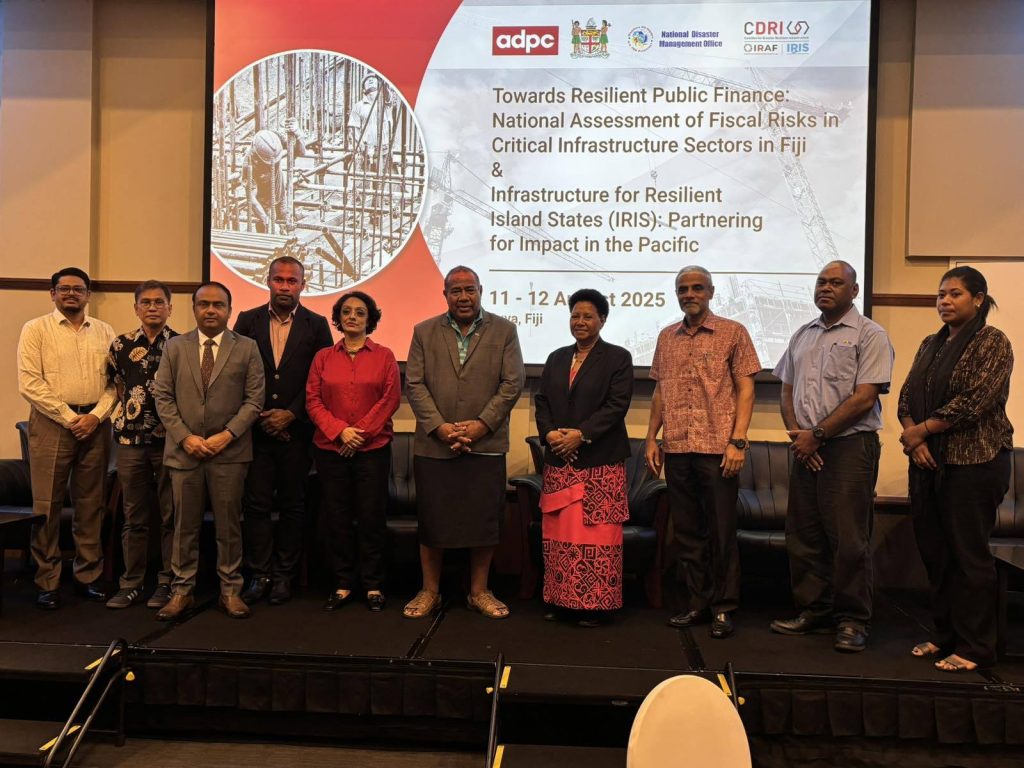
The Permanent Secretary for the Ministry of Public Works, Meteorological Services and Transport, Mr. Paula Baleilevuka, has called for stronger collaboration, innovative financing, and community-driven action to strengthen Fiji’s infrastructure resilience against disasters.
Speaking on the second day of the National Workshop on Assessment of Fiscal Risks Due to Disasters in Critical Infrastructure Sectors, Mr. Baleilevuka highlighted the Infrastructure for Resilient Island States (IRIS) programme as a key partner in building Fiji’s capacity to withstand and recover from natural hazards.
“Through IRIS, Fiji is not only bolstering road and transport systems, but also improving preparedness across utilities, telecommunications, housing, and coastal protection,” he said. “We must leverage this momentum to integrate resilience into every sector of our national development.”
IRIS, a flagship initiative of the Coalition for Disaster Resilient Infrastructure (CDRI), was launched at COP26 to support Small Island Developing States (SIDS) through grants, technical expertise, and capacity building. Backed by donor commitments of USD 40–50 million from partners including India, the United Kingdom, the European Union, and Australia, IRIS focuses on country-driven projects in areas such as resilient building codes, nature-based solutions, and integrated disaster warning systems.
A key Fiji-based IRIS project developed in collaboration with the Fiji Meteorological Service, Live & Learn Fiji, and the National Disaster Management Office aims to map, assess, and plan for a comprehensive Multi-Hazard Early Warning System. This will merge tsunami, storm, and flood alerts into a unified platform, improving response times, public communication, and institutional preparedness.
Mr. Baleilevuka urged government agencies, development partners, and communities to:
Leverage the IRIS funding pipeline for projects aligned with the Sustainable Development Goals and the Sendai Framework for Disaster Risk Reduction.
Integrate fiscal safeguards into infrastructure planning, ensuring budgets include contingencies for climate and disaster risks.
Foster cross-agency collaboration so that ministries and sectors align in infrastructure risk assessments and resilience strategies.
“This workshop is more than a meeting it is a launchpad for resilient fiscal stewardship and infrastructure security in Fiji and across the Pacific,” he said. “By acting now, we not only reduce disaster losses, but we also safeguard our economic, cultural, and environmental assets for future generations.”
The two-day workshop brings together local and international experts, government officials, and development partners to strengthen Fiji’s disaster risk frameworks and build a pipeline of resilient infrastructure projects for the Pacific region.
Source: Fiji’s Ministry of Public Works, Meteorological Services and Transport
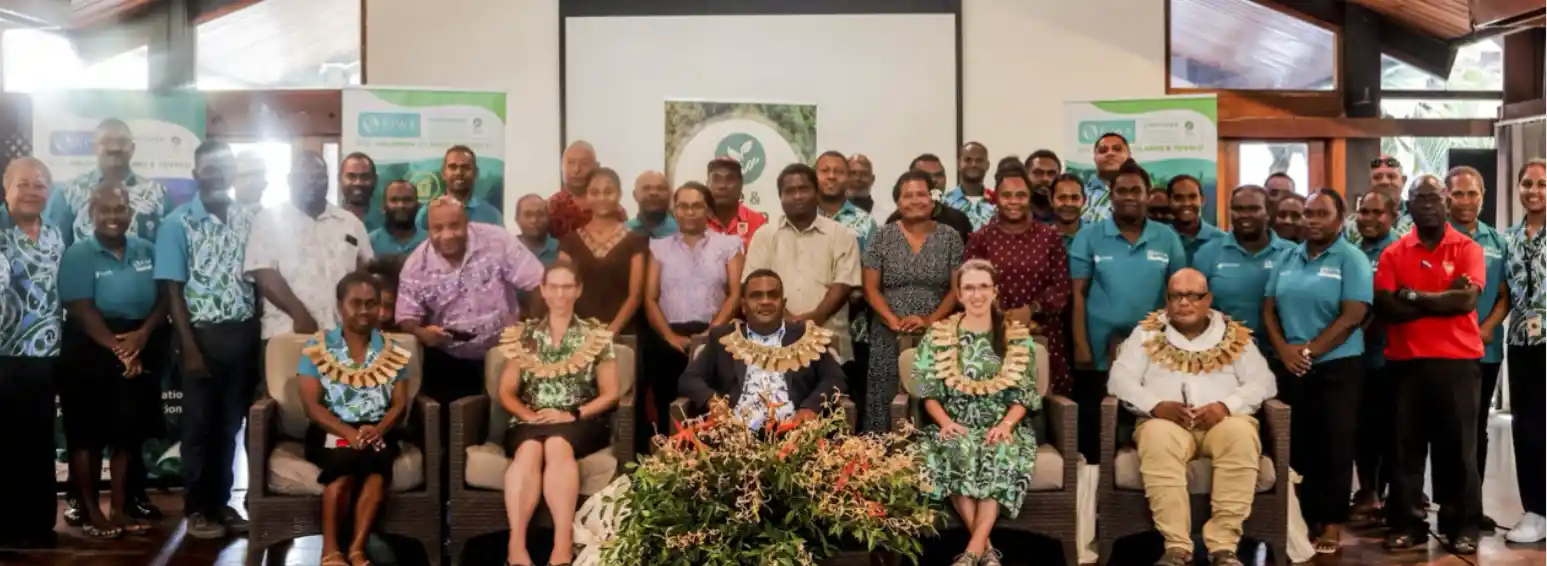
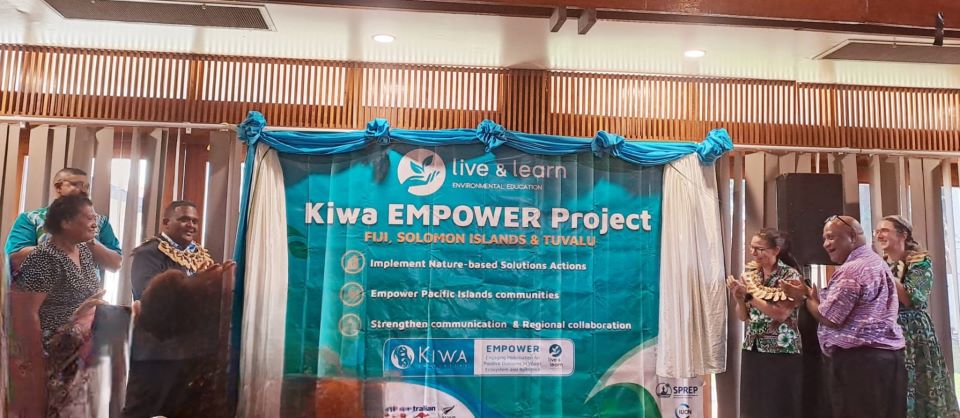
Two small island communities in Solomon Islands will benefit from the Kiwa Empower project officially launched yesterday. Nifili Island in Temotu Province and Sikaiana Island in Malaita Province are the two sites where the project will work with stakeholders to strengthen nature based solutions (NbS) aimed at inclusive and equitable climate change adaptation, food and water security and biodiversity conservation.
The Kiwa Initiative launched its EMPOWER project with support from Australia and other donors in Solomon Islands on 24 June.
The Kiwa EMPOWER project will restore ecosystems and improve the health of waterways to increase climate resilience in two remote communities: Sikaiana in Malaita Province and Nifiloli in Temotu Province.
In Solomon Islands, the EMPOWER project will be implemented by Live and Learn Environmental Education, who will work directly with communities to incorporate indigenous knowledge and ensure solutions are locally-led. Congratulations to community leaders in Sikaiana and Nifiloli for your commitment to a more sustainable future.
During the Kiwa EMPOWER launch, Honourable Trevor Mahaga, Minister for Environment, Climate Change, Disaster Management and Meteorology said, “To the donor partners … we extend our deepest appreciation. Your support has not only provided funding but has reignited hope. Through your partnership, Solomon Islands can step towards community led climate adaptation, resilience building and biodiversity protection.”
HE Rod Hilton, High Commissioner to Solomon Islands said, “ Australia is proud to support this project. We are especially pleased that it will focus on two harder to reach communities, because remoteness can increase vulnerability to the impacts of climate change and disasters”.
“Nature-based solutions,” High Commissioner Hilton said,“like those implemented through the EMPOWER project, address the environmental and social challenges of climate change simultaneously.”
The Kiwa Initiative brings together five donors; France, the European Union, Canada, New Zealand and Australia. Australia has proudly contributed to Kiwa since 2020 – providing SBD32 million across the Pacific region. The Australian Government remains deeply committed to action on climate change, both at home and in our region. The Kiwa Initiative is an important demonstration of this commitment.
Live and Learn Fiji has joined forces with the Ministry of Agriculture to assist residents of Mataniborosisi Settlement in Lami in addressing the impacts of climate change.
According to the non-governmental organization, the residents’ farming areas are being inundated with seawater during high tide due to coastal erosion and rising sea level.
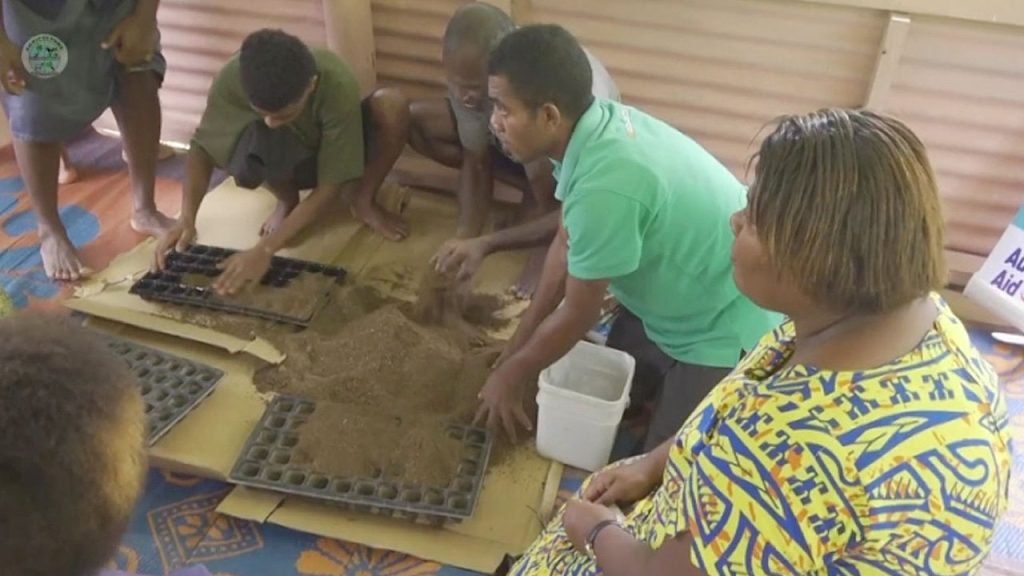
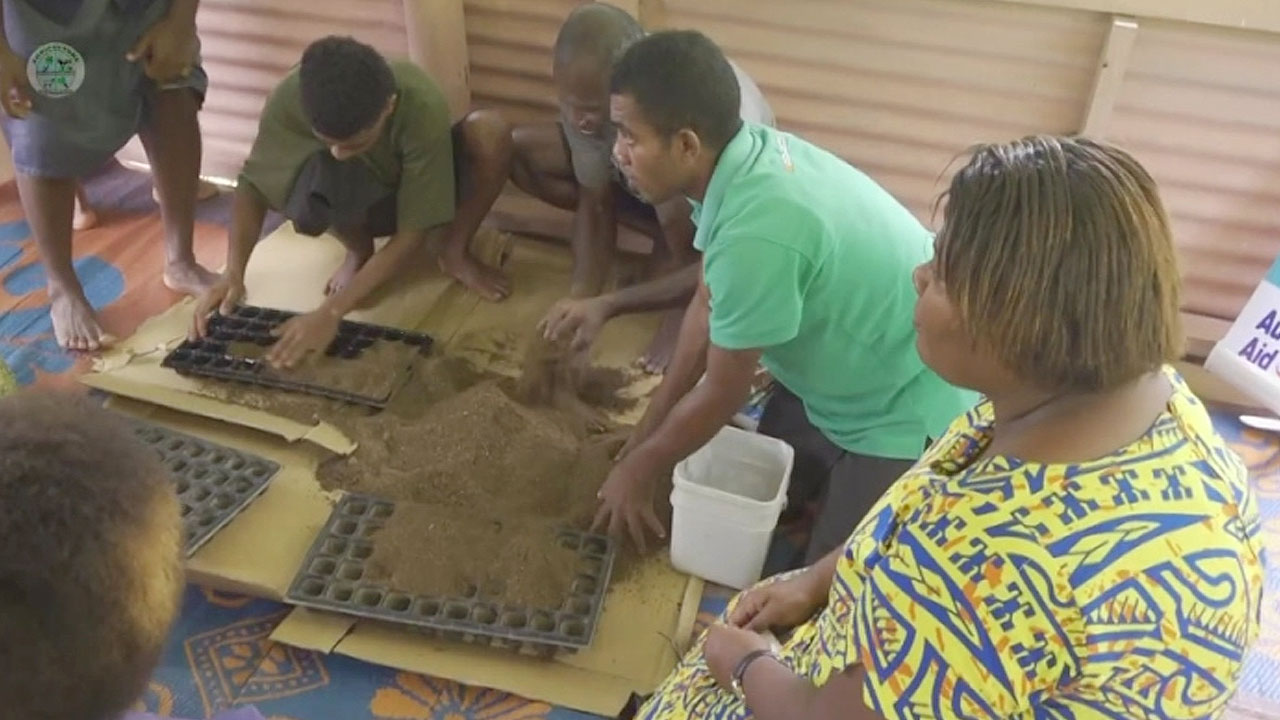
Live and Learn Food Security Coordinator Ponijese Korovulavula says a joint workshop between the organization and the Agriculture Ministry was held for residents on recycling and reuse of constructed goods, seed rearing, and sound agricultural practices to help them protect their land and resources from the impacts of climate change.
In the vast expanse of the Pacific, an innovative initiative that continues to revolutionize how parliaments analyze and understand their national budgets. The Floating Budget Office (FBO) is empowering Pacific nations to make more informed decisions about their financial futures. But what exactly is the FBO, and how is it making a difference?
The FBO is a Pacific Parliament-led initiative providing critical collaborative support to parliaments during the review of their national budgets. Upon the request, UNDP facilitates a team of experienced parliamentary researchers from across the region supporting the national parliament capacity in analyzing their budget.
Through this effort, parliaments throughout the region will be able to share best practices and information in an inclusive environment.
The FBO’s work is essential to making sure that public budgets, which are frequently complicated and technical, are transparent and subject to in-depth analysis. The FBO actively engages a variety of stakeholders, including Civil Society Organizations (CSOs), in the budget review process by advocating a whole-of-society approach.
UNDP’s Support
UNDP Pacific has been providing technical assistance to parliaments to build the capacity of legislators to strengthen the relationship between parliament and the executive and civil society since 2017.
FBO supporting via briefs with internal government business discussions, UNDP Pacific has been offering technical assistance to parliaments in efforts to build capacity of legislator.
The budgets are often complex and require in-depth technical experience and knowledge in public finance, the FBO offers collaborative budget analysis to support Pacific parliaments and MPs while strengthening the region’s capacity for parliament research. As a result, UNDP has been considering how to advance a flexible architecture that would allow Pacific Parliaments to exchange knowledge and provide mutual support throughout their different budgetary procedures.
Under the direction of a team leader from the host or national parliament, the researchers create concise studies on important industries, offering unbiased and impartial information to legislators and civil society organizations. The independent approach builds trust and advances a culture of accountability and transparency in budgetary matters, which is essential for effective governance and development.
In 2021, UNDP invested in enhancing the quality of analytical tools available to parliamentary researchers, focusing on strategies to improve the PFBO’s budget analysis processes. This resulted in the development an automated budget analysis tool that streamlines the production of budget briefings for MPs, reducing resource demands while increasing the speed and accuracy of the analysis.
FBO in 2024
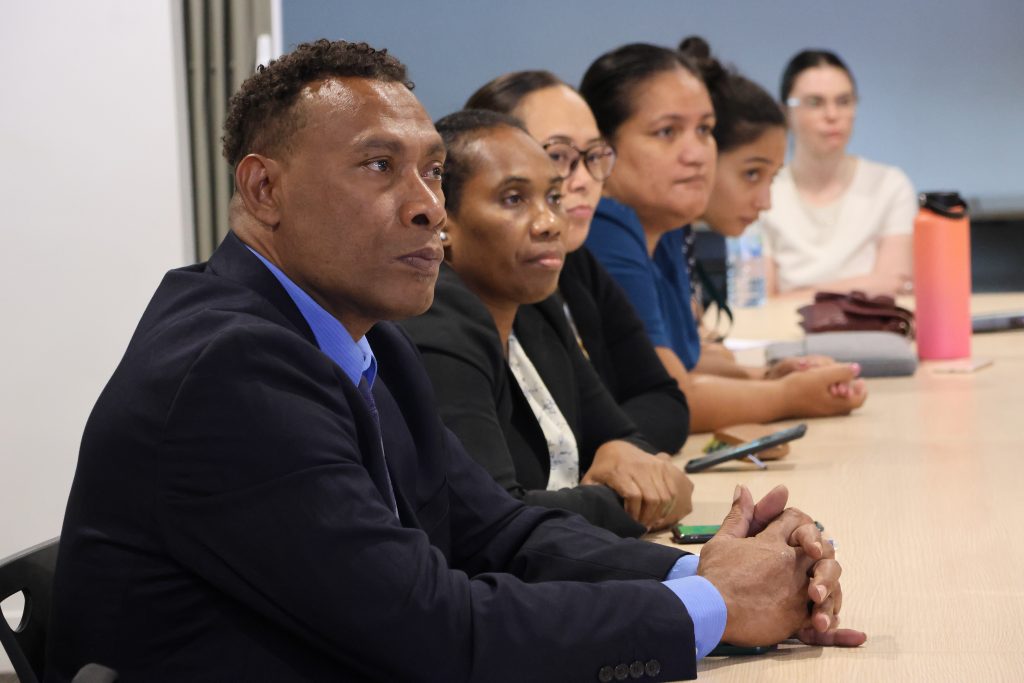
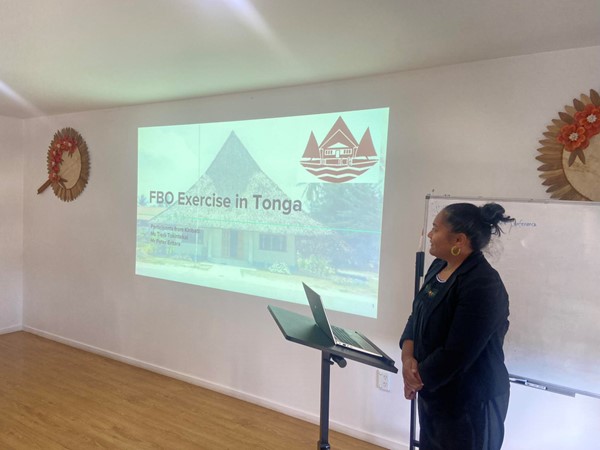
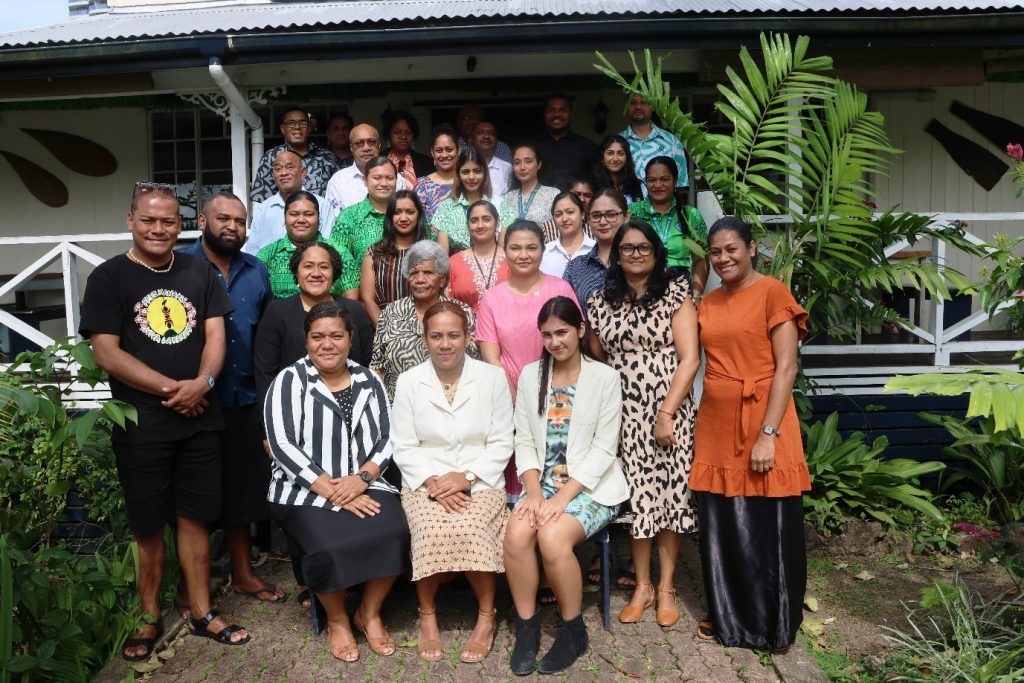
This year, the FBO was hosted by the Parliament of Tonga in April and the Parliament of Fiji in June consisting of participants from Tonga, Fiji, Kiribati, Vanuatu, Solomon Islands, Australia and New Zealand. This helps the national parliament in staff capacity-building, enhancing knowledge of budget processes in other parliaments, learning about budget analysis practices and templated used in other parliaments and developing and strengthening budget researchers’ network.
Civil Society Organizations (CSOs) workshop
A key factor in forming and bolstering democratic processes is civil society. This is why FBO briefings are not only presented to Parliamentarians but also to varying CSOs. When civil society understands the complex budget documents and decisions, they can play an active role in advocating for various public interests.
By engaging CSOs, the FBO aligns with a whole-of-society and collaborative approach, which is critical for sustainable development. A one-day workshop was conducted by the Parliaments of Tonga and Fiji to help CSOs understand the allocated priorities of the budget and develop a basic understanding of budget analysis. By involving CSOs and the public in the analysis of public finance, FBO ensures that budgets reflect the needs and aspirations of the people.
Representative from the Soqosoqo Vakamarama iTaukei, Ana Vesikula, said public finance management is important for the country for nation building, peace stability and for sustainable economic growth.
“It is important to have the public informed and engaged from consultation to the implementation of the budget along with the various levels of the society and stakeholders. Having the budget in three main languages in Fiji would assist people to understand and have more knowledge of the budget of what is allocated, why and how,” she said.
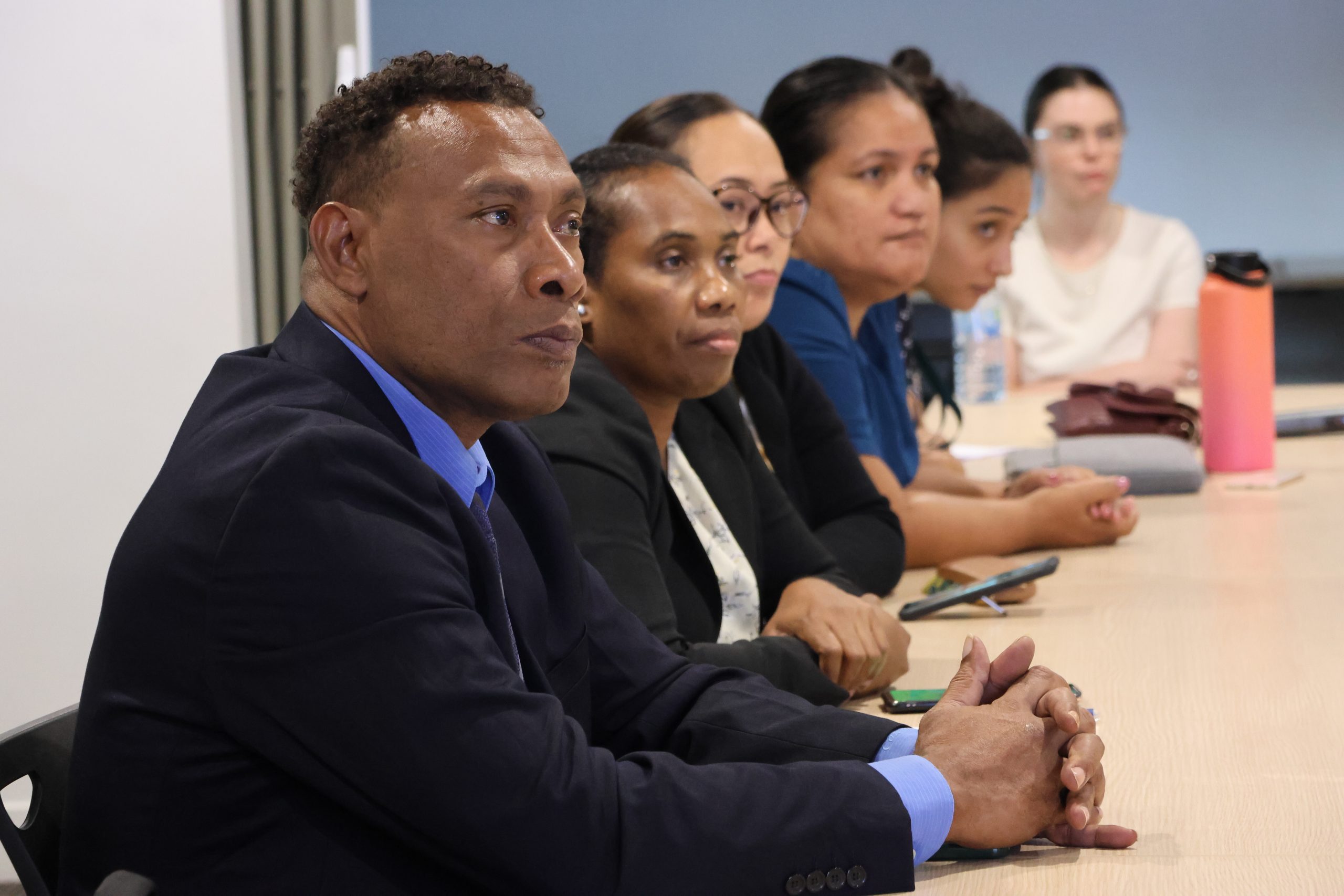
Gender and Resilience Officer from Live and Learn Fiji, Joseva Ravula, said as a first-timer to this workshop, it highlighted the importance of the budget, what it meant, what it is and for who. “One of the things that brings to the table is the importance of people knowing the budget. I am not sure whether the information about the budget is very inclusive; to think about those who use braille – was it accounted for; those who have hearing impairments if it was accounted for them. When we look at the inclusivity of information, we need to meet the needs of our people because they have the right to hear, to see, to be answered with the information surrounding the budget,” he said.
UNDP Pacific Office in Fiji provides essential support for parliamentary development across the region through two regional projects: the Pacific Parliamentary Effectiveness Initiative (PPEI), supported by the Government of New Zealand’s Ministry of Foreign Affairs and Trade (MFAT), and the second phase of the Strengthening Legislatures in Pacific Island Countries project, supported by the Government of Japan. In addition, this work is also made possible via the Fiji Parliament Support Project, supported by MFAT and Australia’s Department of Foreign Affairs and Trade.

 Leverage the IRIS funding pipeline for projects aligned with the Sustainable Development Goals and the Sendai Framework for Disaster Risk Reduction.