Climate Infrastructure for Resilient Coastlines and Riverbanks (CIRCAR)
Resilient Communities
Nature based Solutions (NbS)
Climate resilience
Food preservation
Disaster Risk Reduction
Gender & Social Inclusion
Empowered communities
Resilient Communities
Nature based Solutions (NbS)
Climate resilience
Food preservation
Disaster Risk Reduction
Gender & Social Inclusion
Empowered communities

For more information, feel free to reach out to us.

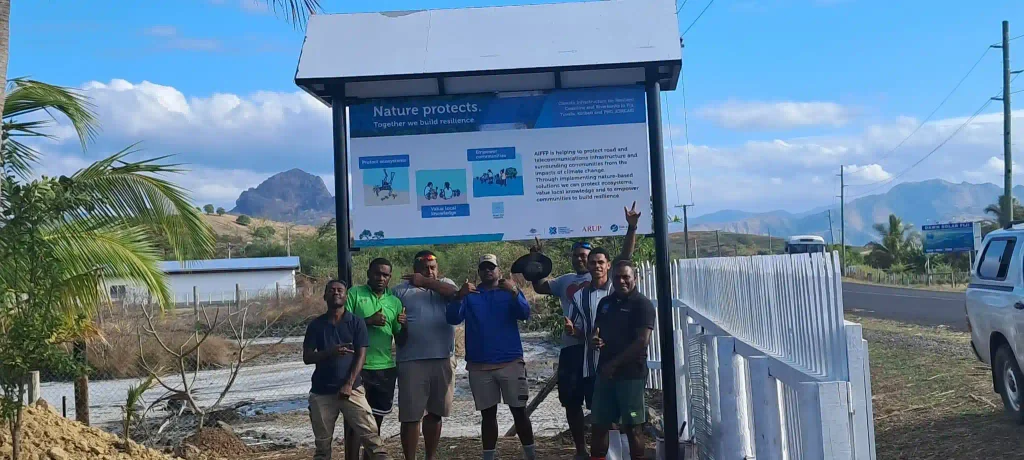
The Climate Infrastructure for Resilient Coastline and Riverbanks (CIRCAR) program harnesses natural systems to address environmental challenges and safeguard critical infrastructure from the impacts of climate change and natural hazards.
Through the CIRCAR Project, the Australian Government, through the Australian Infrastructure Financing Facility for the Pacific (AIFFP) is partnering with the Live & Learn Environmental Education Fiji and technical partner ARUP to strengthen the climate resilience of key infrastructure investments in Fiji, Kiribati, Papua New Guinea and Tuvalu.
The primary aim of the project is to safeguard infrastructure investments by integrating Nature-Based Solutions (NbS) into planning, design, and implementation. This approach reflects the evolving priorities of the Department of Foreign Affairs and Trade (DFAT) in its partnership with the Fiji Roads Authority (FRA), emphasizing sustainable and resilient development.
By embedding NbS into infrastructure development, the project is expected to deliver the following outcomes:
- Enhanced Resilience: Infrastructure assets will be better protected against climate-related risks such as flooding, erosion, and extreme weather events.
- Environmental Co-benefits: Restoration and preservation of natural ecosystems (e.g., mangroves, wetlands, forests) will support biodiversity and improve ecological health.
- Community Engagement: Local communities will be involved in the design and stewardship of NbS, fostering ownership and long-term sustainability.
- Cost-Effectiveness: NbS can reduce long-term maintenance costs and provide more adaptable solutions compared to traditional engineering alone.
- Policy Integration: The project will contribute to mainstreaming NbS into national infrastructure planning and policy frameworks.
Over the next four months, the project will prioritize sustained engagement with stakeholders and local communities. This phase will involve conducting essential technical activities—such as geological and oceanographic surveys—alongside other critical assessments led by relevant agencies. Additionally, efforts will be made to deliver training and build the capacity of communities to effectively implement Nature-Based Solutions (NBS) interventions