50% of Fiji’s Infrastructure Lacks Disability Access
About 50 per cent of infrastructure and building projects in Fiji lack accessibility for persons living with disabilities, it has been revealed. This information came to light during a disability inclusion training organised by the Fiji Disabled Peoples Federation (FDPF) and Australian Humanitarian Partnership (AHP) for the Live and Learn Fiji staff. The training took […]
Twenty communities in Vanua Levu are set to benefit from a three-year environmental resilience and climate adaptation initiative. This follows the successful launch of the national Kiwa Empower Project, valued at $7.5 million for Fiji, Tuvalu, and the Solomon Islands, funded by the European Union, France, Canada, Australia, and New Zealand. Most of the targeted […]
ABOUT 71,000 Fijians on Vanua Levu could benefit from a $1.62 million Ecosystems-based Climate Adaptation Project (ECAP). The project, a targeted three-year development intervention to build local socioeconomic resilience to climate change, would be implemented by nongovernment organisation Live & Learn Environmental Education Fiji with funding from the European Union. Speaking at the project launch, […]
New portal to boost NGOs service reach to rural communities
Anew informative portal (website) launch marked a new era of online service delivery for target communities and rural settlements in the Northern Division. The launching held recently in Labasa was part of the Ecosystem-based Climate Adaptation Project (ECAP) implemented by the Live and Learn Environmental Education Fiji organisation. Under the ECAP project, 18 communities in […]
Villagers learn Bee Keeping under EU funded project
EU Ecosystems-Based Climate Adaptation Project (ECAP) successfully launch the Beekeeping Training in Nakasa Village in Cakaudrove. This is being done through an initiative under the EU funded Ecosystem-based Climate Adaptation Project. The Basic Beekeeping Training will be undertaken in 20 communities in the Northern Division, seven in Bua, three in Macuata and 10 in the […]
The European Union and Live & Learn build socio-economic resilience to climate change in the northern communities of Fiji
ECAP is a targeted 3-year development intervention (2020-2022), implemented by Live & Learn Environmental Education Fiji, with a funding of FJD 1.62 million. Its overall objective is to build local socio-economic resilience to climate change in vulnerable communities in the Northern Division of Fiji. ECAP targets 75 villages in the Provinces of Cakaudrove, Bua and […]
Eighty-eight-old Miriama Cawaki lives alone with her grandchildren in their Sadroa home in Serua. While she depends on her Social Welfare assistance to support their livelihood, the COVID-19 crisis brought about many challenges as the confinement prevented them from accessing necessities. It was during this difficult situation that the Australian Humanitarian Partnership (AHP) distributed dignity […]
The Ministry of Rural and Maritime Development and Disaster Management, through the National Disaster Management Office (NDMO), received nine computer sets worth $30,000 from Live and Learn Fiji and Care Australia last week to boost future disaster response operations in the Northern Division. Acting Prime Minister and Minister for Rural and Maritime Development and Disaster […]
NDMO receives $21k worth of media and training equipment
The National Disaster Management Office (NDMO) received media and training equipment from Live and Learn worth $21k. This is expected to assist the NDMO’s office on preparedness and response to natural disasters. Director for NDMO Vasiti Soko said this assistance would allow their officers to create more quality content and increase awareness on preparedness and […]
Fiji Advances Infrastructure Resilience with IRIS Partnership
The Permanent Secretary for the Ministry of Public Works, Meteorological Services and Transport, Mr. Paula Baleilevuka, has called for stronger collaboration, innovative financing, and community-driven action to strengthen Fiji’s infrastructure resilience against disasters. Speaking on the second day of the National Workshop on Assessment of Fiscal Risks Due to Disasters in Critical Infrastructure Sectors, Mr. Baleilevuka […]
About 50 per cent of infrastructure and building projects in Fiji lack accessibility for persons living with disabilities, it has been revealed.
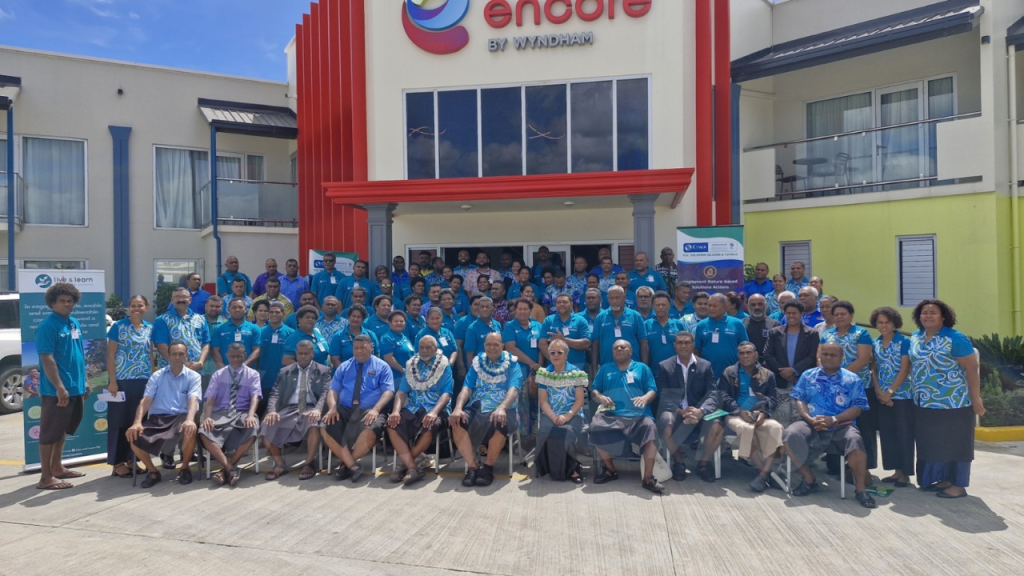
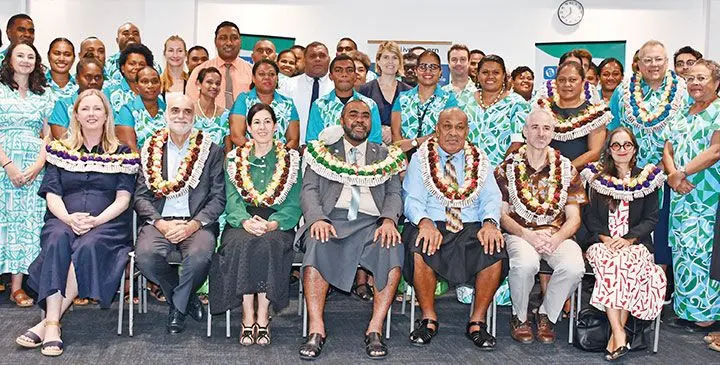
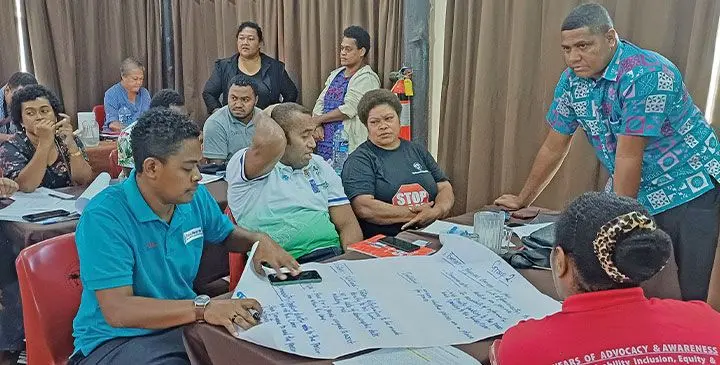
This information came to light during a disability inclusion training organised by the Fiji Disabled Peoples Federation (FDPF) and Australian Humanitarian Partnership (AHP) for the Live and Learn Fiji staff.
The training took place at the Friendly North Inn in Labasa yesterday.
Live and Learn Fiji’s gender and resilience officer, Joseva Ravula, said to address this growing concern, there was a plan in place to conduct a disability access audit.
“We are working with the FDPF on how to facilitate the audit and collaborate with relevant stakeholders to create accessible environments for persons living with disabilities,” Mr Ravula said.
He added that following the training, they would be in a better position to begin working on the audit.
Fiji Disabled Peoples Federation (FDPF) representative, Jay Nasilasila, said the access audit was a process, and an assessment would be conducted on physical infrastructure and the environment.
“We hope that all institutions and service providers will also ensure accessibility for persons living with disabilities,” Mr Nasilasila said.
“We identified the need for this audit during a workshop in Suva, as we have observed that public spaces in Fiji still require some adjustments.”
He said the access audit is not about removing infrastructure or projects, but rather about finding ways to adjust or modify them to allow access for persons living with disabilities.
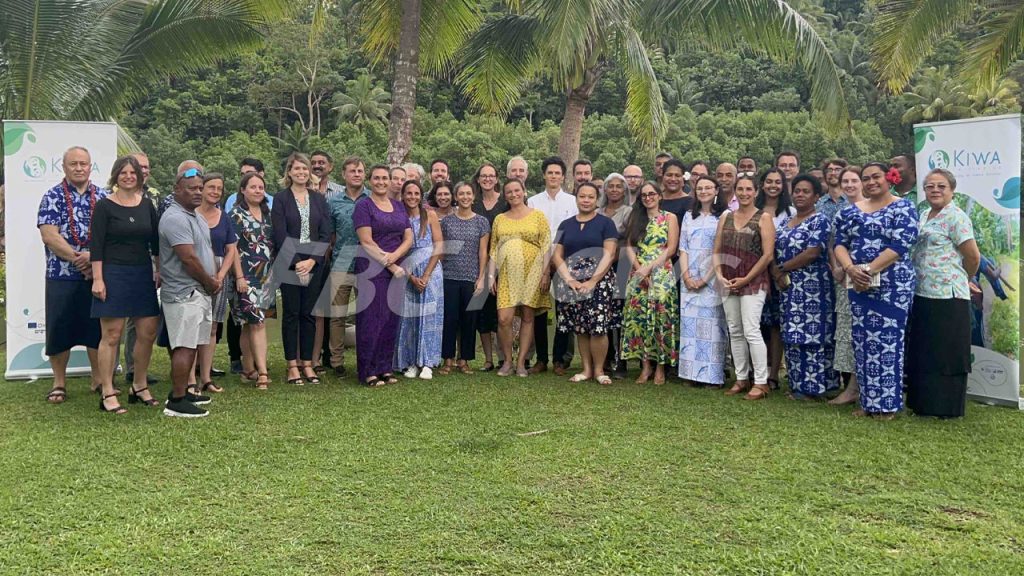
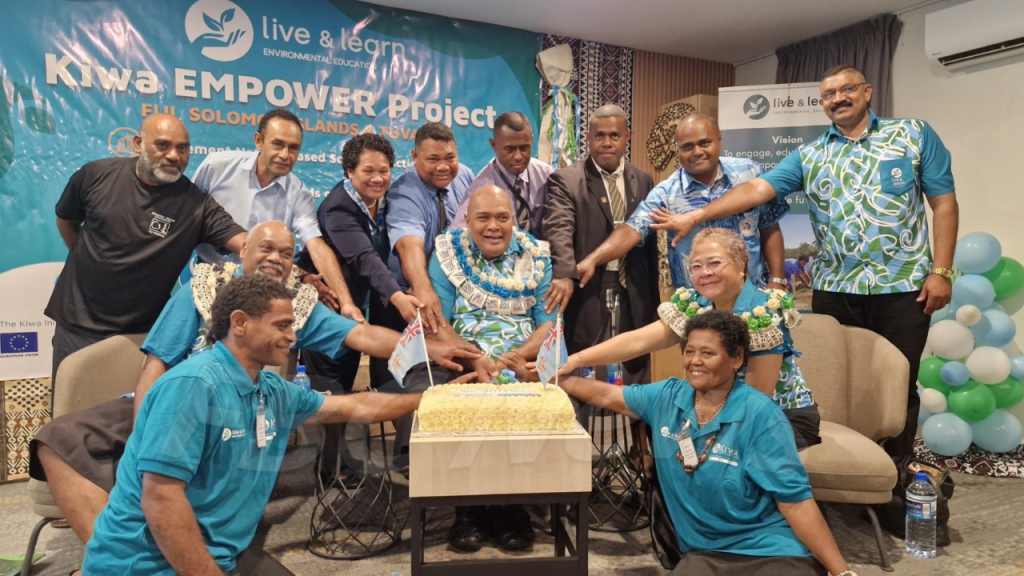
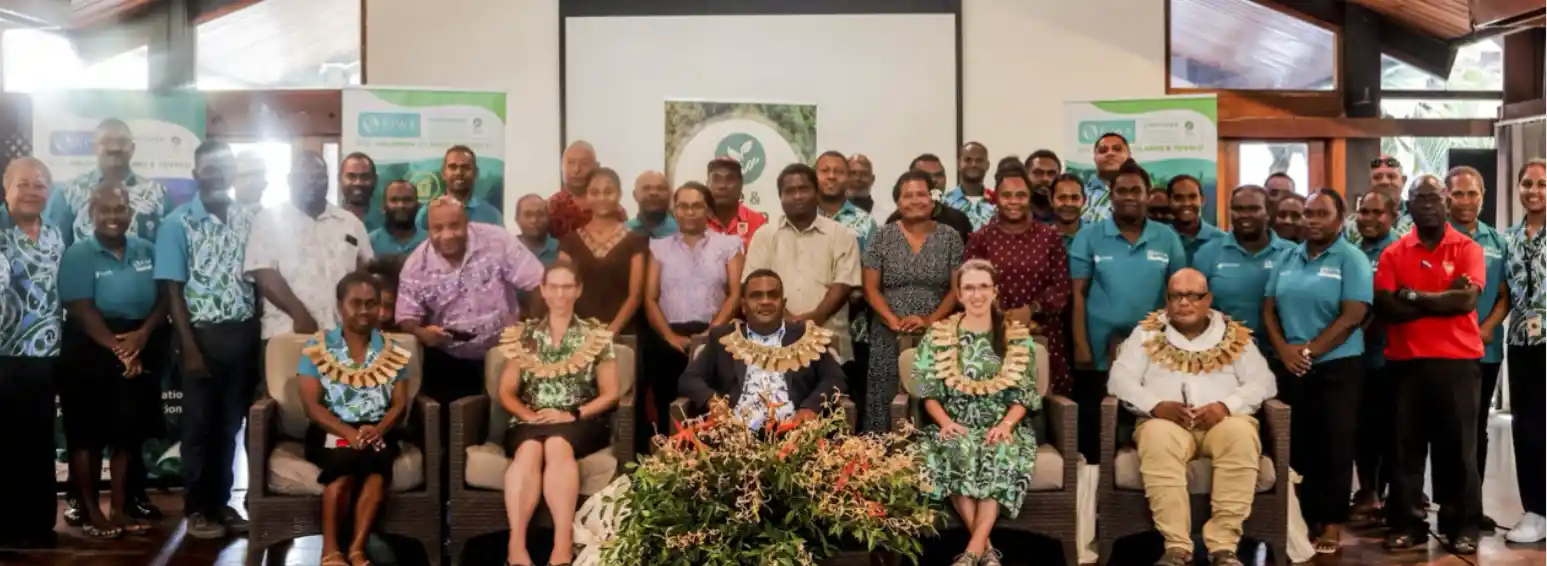
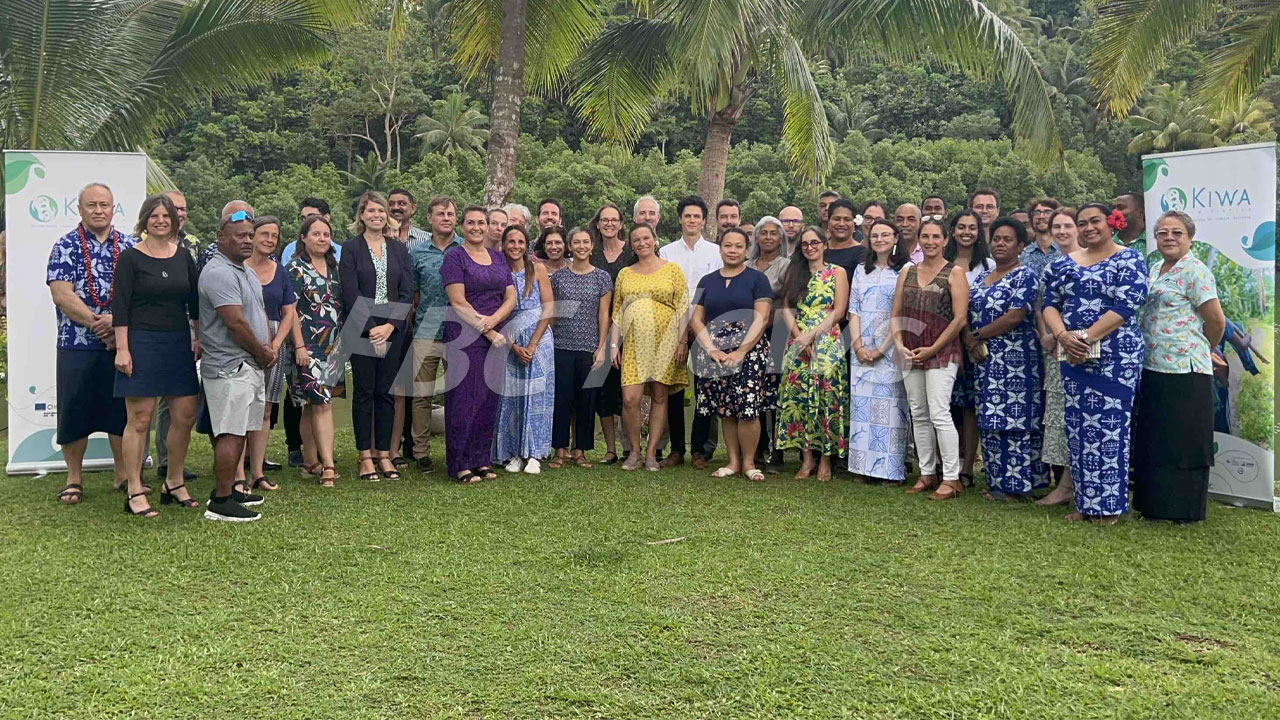
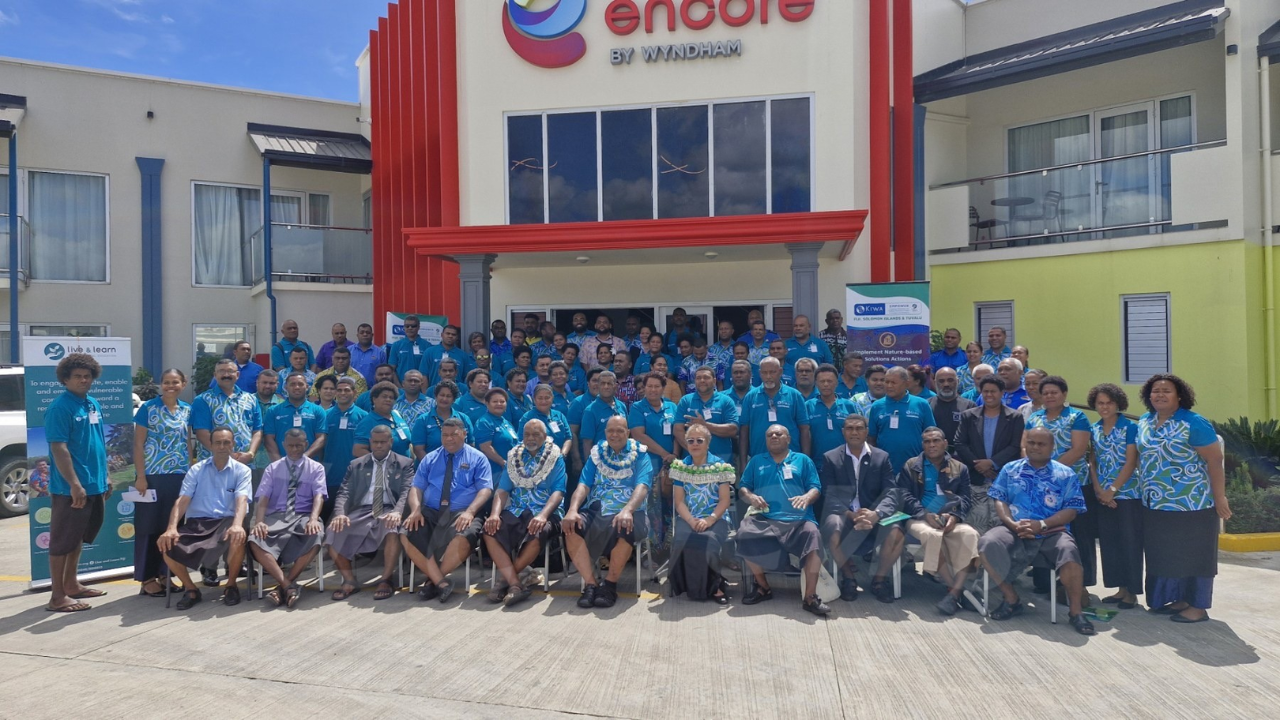
Twenty communities in Vanua Levu are set to benefit from a three-year environmental resilience and climate adaptation initiative.
This follows the successful launch of the national Kiwa Empower Project, valued at $7.5 million for Fiji, Tuvalu, and the Solomon Islands, funded by the European Union, France, Canada, Australia, and New Zealand.
Most of the targeted communities are coastal and vulnerable to the impacts of climate change. Under the project, they will undergo training and implement nature-based solutions to strengthen climate resilience.
Regional Project Manager Subesh Prasad says this marks a significant milestone in addressing the needs and ongoing challenges faced by affected communities.
“We acknowledge the support of the commissioner’s north office. Their support has been very instrumental to this Kiwa Empower project, not only on this but also on all the other Live & Learn projects that have been implemented in the Northern division.”
Country Director for Live & Learn Environmental Education Fiji, Dorris Susau, commended the resilience and commitment of communities where the project will be implemented.
“When we design and implement it, it is aligned with national priorities, and more importantly, it addresses the need of the community in the manner that is relevant and appropriate to you, so it’s not about us; it’s all about you.”
She highlighted that partnership and collaboration remain central to the Kiwa Empower Project, with a commitment to continue supporting rural and remote communities in the North.
The project will focus on key areas including conservation, disaster risk reduction, food security, gender equality, disability and social inclusion, water resource management, and human health.
The twenty participating communities are Naivaka, Naiviqiri, Nasau, Ravuka, Cawadevo, Visoqo, and 14 others across Cakaudrove.
ABOUT 71,000 Fijians on Vanua Levu could benefit from a $1.62 million Ecosystems-based Climate Adaptation Project (ECAP).
The project, a targeted three-year development intervention to build local socioeconomic resilience to climate change, would be implemented by nongovernment organisation Live & Learn Environmental Education Fiji with funding from the European Union.
Speaking at the project launch, EU ambassador for the Pacific Sujiro Seam said building climate resilience in the Northern Division with ECAP would provide local communities with a welcome source of income in the midst of the COVID-19 crisis.
“It is fully in line with the European Green Deal, which remains the top priority of the European Union,” he said.
Mr Seam also said the project was consistent with the EU approach which was to build strong partnerships between governmental authorities, civil society organisations and local communities.
Non-Government organisation, Live and Learn Environmental Education Fiji, country manager, Doris Susau (left), and Ecosystems-based Climate Adaptation Project (ECAP) (right), Subesh Prasad shows Divisional Planning Officer, Setareki Dakuiboca (middle) the new portal and its operation during its launch in Labasa on September 8, 2022.
Anew informative portal (website) launch marked a new era of online service delivery for target communities and rural settlements in the Northern Division. The launching held recently in Labasa was part of the Ecosystem-based Climate Adaptation Project (ECAP) implemented by the Live and Learn Environmental Education Fiji organisation.
Under the ECAP project, 18 communities in the North are part of ECAP-related projects where sustainable community livelihood projects like beekeeping, agriculture and others are supported. The programme is funded by the European Union. Organisation president, Doris Susau, said the launching fulfilled the project objective to build local socioeconomic resilience to climate change in vulnerable communities in the Northern parts of Fiji.
Ms Susau said the portal was developed to establish tools visible to the climate change sector, Government and communities. She said it would connect and closely share the learnings and knowledge resources from the project with their active communities and interested stakeholders. “Structured exchanges will be used to share learning within and between communities and this will be via sharing links on the social media, widely used by our communities,” she said.
Chief guest, Divisional Planning Officer, Setareki Dakuiboca, shared his gratitude to the organisation as it positively impacted the livelihood of its target communities.
EU Ecosystems-Based Climate Adaptation Project (ECAP) successfully launch the Beekeeping Training in Nakasa Village in Cakaudrove. This is being done through an initiative under the EU funded Ecosystem-based Climate Adaptation Project.
The Basic Beekeeping Training will be undertaken in 20 communities in the Northern Division, seven in Bua, three in Macuata and 10 in the Cakaudrove Province
Delegation of the EU for the Pacific Head of Section Civil Society, Pedro Velazquez launched the project and the training on Tuesday.
ECAP is a targeted 3-year development intervention (2020-2022), implemented by Live & Learn Environmental Education Fiji, with a funding of FJD 1.62 million. Its overall objective is to build local socio-economic resilience to climate change in vulnerable communities in the Northern Division of Fiji. ECAP targets 75 villages in the Provinces of Cakaudrove, Bua and Macuata and aims to benefit an estimated 71,000 Fijians. It focuses on communities that are vulnerable and activities that are responsive and inclusive to community priorities while being reinforced and well supported by national processes.
The key drivers for socio-economic resilience for this action are the generation and sale of carbon credits and the establishment of village-based honey cooperatives that produce rainforest certified honey. These drivers will be enabled through the protection of forest ecosystems which are vital for carbon capture and slowing down climate change.
“Building climate resilience in the Northern Division of Fiji with this Ecosystem-Based Climate Adaptation Project also provides local communities with a welcome source of income at the time of the COVID-19 crisis. It is fully in line with the European Green Deal, which remains the top priority of the European Union. It is consistent with the EU approach, to build strong partnerships between governmental authorities, civil society organisations and local communities” said Ambassador Seam.
Moreover, it must be highlighted that the EU supported the first independent project in Fiji for Forest Carbon Capture and Trade, the Drawa Forest Carbon Project, that gained Government’s approval and was developed by Live & Learn and the Nakau Programme. In Drawa, landowners gave up rights to logging timber in exchange for the opportunity to sell rainforest carbon credits as a way of generating revenue for local economic development and building resilience to climate change. The project is officially recognised as a pilot activity and has assisted the Government develop its national REDD+ Policy. Based on this successful intervention, the EU is funding this second large-scale carbon credit project in partnership with the Government and with a view of preserving the ecosystems of vulnerable climate communities in Fiji. Live & Learn is well placed to adapt and replicate the Drawa model at an appropriate scale in Fiji, in collaboration with the national programmes and governmental priorities on climate change and REDD+ issues.
The ECAP project will also promote and advance gender equity and social inclusion through socio-economic resilience. It will take a strength-based approach that acknowledges existing systems and resources in the local community and adds value to these. Moreover, it will support youth participation in local climate resilient economies, climate change decision-making and climate change leadership.
ENDS
Media Contact:
For further information, please contact the Project Manager at Suva Head Office 52 Imthurn Road, Domain. Private Mail Bag, Suva. Tel: (679) 331 5868; or the Senior Project Officer at Northern Office Lot 4, Naiyaca Sub-division, Labasa, Fiji. Tel: (679) 881 8855
Eighty-eight-old Miriama Cawaki lives alone with her grandchildren in their Sadroa home in Serua.
While she depends on her Social Welfare assistance to support their livelihood, the COVID-19 crisis brought about many challenges as the confinement prevented them from accessing necessities.
It was during this difficult situation that the Australian Humanitarian Partnership (AHP) distributed dignity kits through its partner Live and Learn Environmental Education Fiji (LLEE) to 1000 people to meet their protection needs.
Dignity kits contained hygiene and sanitary items, as well as other items explicitly tailored towards the local needs of women and girls of reproductive age in particular communities.
Generic hygiene kits help people improve cleanliness.
While dignity kits are similar to basic hygiene kits often distributed at the onset of emergencies, dignity kits serve a broader purpose and so contain a wider range of items.
Dignity kits help women and girls maintain their dignity during humanitarian crises.
A key item in the dignity kit distributed by LLEE is the reusable sanitary pads.
The kit contains a bucket with a lid, sanitary pads, reusable sanitary napkins, panties, bathing soap, washing soap, solar light and COVID-19 messaging.
Also included are Gender Based Violence leaflets. “Na bula i nakoro e sega ni rawarawa ena noda saga me da vaqara na bula. Na vurevure ni ilavo e dredre me voli kina na veika lalai eda gadreva kau vakavinavinaka ena veivuke e yaco mai ni veisotavi saraga kei na neimami gagadre. Na sovu e vukei au saraga ena noqu savasava ena veisiga (Getting access to basic necessities is quite hard in the village because we do not have a good source of income. I am thankful that when we received our assistance, we were really in need and I got my supply of washing soap to help with the laundry),” Mrs Cawaki said.
Mrs Cawaki said the sanitary pads and reusable sanitary napkins would be used by her granddaughters.
She commended LLEE for this great idea, saying that it suited village life.
“Sa dredre na bula na ilavo madaga e rawa sa vakayagataki ena kakana ka sega ni vagolei ena voli nodra yaya ni tataqomaki na makubuqu (Life is hard and whatever money we receive we use it to buy food. We no longer have to buy sanitary pads now for my granddaughter with the reusable ones received).”
She also decided to give the bucket to her daughter in Beqa who had just given birth when the assistance arrived.
Ema Maimai, 64, is also thankful for the assistance. She owns a washing machine, but because life is hard in the village she utilised the washing soap to wash her clothes using the machine.
“Au se vakayagataka tikoga qo na noqu sovu. Au dau tonia ena sovu me malumu qai sava ena misini (I am still using the washing soap that was given. I soak my clothes with soap before loading it in the washing machine using the soap water to wash them).”
Ms Maimai was also grateful for the solar light that will be used in times of blackout and would come in handy during as we enter the new cyclone season.
She revealed that she was safely keeping the reusable sanitary napkins to be used by her 11-year-old granddaughter when she has her menstruation.
The AHP, through LLEE, distributed dignity kits and MHM reusable products and awareness to girls in schools, including COVID-19 messaging and GBV in the Central Division focusing on the province of Serua and Rewa.
Ema Maimai shares her story with AHP MERLI Technical Support Officer Paulini Vakacegu . Picture: SUPPLIED
The initial target was 500 and now increased to 1000 beneficiaries.
AHP WASH project officer for Live and Learn, Litiana Dimaopa said preserving dignity was essential to maintaining self-esteem and confidence, which is important to cope in stressful and potentially overwhelming humanitarian situations, thus the distribution of dignity kits during the COVID-19 crisis.
She said supporting women’s self-esteem and confidence also assisted them in providing care and protection to their children.
“Dignity kits focus on promoting mobility and safety of women and girls by providing age, gender, and culturally appropriate garments and other items in addition to sanitary supplies and basic hygiene items. Dignity kits are designed in partnership with affected communities to ensure the most appropriate items are included, and distribution is carried out in a manner that minimises the risk of GBV against women and girls,” Ms Dimaopa said.
According to Ms Dimaopa, dignity kits help women and girls by:
Contributing to the psychosocial and physical wellbeing of women and girls, by including items such as intimate wash and pads.
Improving mobility of women and girls by providing specific sanitary items. In some contexts, mobility can also be enhanced by including items such as headscarves or abaya, without which women cannot be seen in public.
Allowing budget substitution for families to purchase other important items, such as food.
Contributing to the protection of women and girls, by including items such as solar lights, so that women and girls do not have to walk in the dark and can call for help.
Providing information about hygiene, reproductive health, GBV related issues, and services though the inclusion of health and protection information.
The Ministry of Rural and Maritime Development and Disaster Management, through the National Disaster Management Office (NDMO), received nine computer sets worth $30,000 from Live and Learn Fiji and Care Australia last week to boost future disaster response operations in the Northern Division.
Acting Prime Minister and Minister for Rural and Maritime Development and Disaster Management Inia Seruiratu received the handover certificate of the items which have been shipped to the North.
He said the computers would be used to complement the high frequency radio systems which were being installed in several black spot areas in the Northern Division.
“Such thoughtful actions are commended and the benefits, I must say, that will not only be a huge boost to the 9HF radio capabilities in the Northern Division but, more importantly, service delivery component – communication – of the ministry during disasters,” he said.
“The greatest advantage of these HF radios is its capability to make communications in long distance stations between the ground level and base emergency operation centres during disasters, and also its reliability to communicate even when the network has been altered or communication towers damaged.
“Now, with the capacity of the 9 new desktop computers, the HF radios can be connected to these computers and they also have the ability to send emails.”
He said such timely support was a boost to their communication systems before, during and after disasters and this act of generosity marked a clear direction to fulfilling the 2030 Global Agenda of reaching the furthest first and leaving no one behind.
In his remarks during the handover ceremony, AHP (Australian Humanitarian Partnership) Fiji country committee coordinator 2021 Josefa Lalabalavu said its partners appreciated the support and partnership of the ministry and NDMO and looked forward to more opportunities for collaboration.
“This, we believe, will support preparedness activities within the Northern Division as well as facilitate response work during times of natural disasters,” he said.
Source: Fiji Times
Acting Prime Minister and Minister for Rural and Maritime Development and Disaster Management Inia Seruiratu during a meeting with his senior staff.Picture:Supplied
The National Disaster Management Office (NDMO) received media and training equipment from Live and Learn worth $21k.
This is expected to assist the NDMO’s office on preparedness and response to natural disasters.
Director for NDMO Vasiti Soko said this assistance would allow their officers to create more quality content and increase awareness on preparedness and response.
“This is a huge boost to our media unit, which will allow us to tell stories of the impact of our preparedness programs and awareness on Disaster Risk Reduction across the country,” Ms Soko was quoted saying in a Government statement.
Ms Soko thanked Live and Learn and the Australian government for its continued support in the areas of building capacity and national partners to understand and effectively address the consequences of and responses to climate-related hazards.
“On behalf of the local Australian Humanitarian Partnership (AHP) partners, we wish to acknowledge the partnership that we have with the Fijian Government and in particular the NDMO.
“In order for our communities and for our institutions of Government to be prepared for disasters, one of the key areas is around training the divisional and district Emergency Operations Centres members as well as capturing the success stories from the recipient of this training.”
The Permanent Secretary for the Ministry of Public Works, Meteorological Services and Transport, Mr. Paula Baleilevuka, has called for stronger collaboration, innovative financing, and community-driven action to strengthen Fiji’s infrastructure resilience against disasters.
Speaking on the second day of the National Workshop on Assessment of Fiscal Risks Due to Disasters in Critical Infrastructure Sectors, Mr. Baleilevuka highlighted the Infrastructure for Resilient Island States (IRIS) programme as a key partner in building Fiji’s capacity to withstand and recover from natural hazards.
“Through IRIS, Fiji is not only bolstering road and transport systems, but also improving preparedness across utilities, telecommunications, housing, and coastal protection,” he said. “We must leverage this momentum to integrate resilience into every sector of our national development.”
IRIS, a flagship initiative of the Coalition for Disaster Resilient Infrastructure (CDRI), was launched at COP26 to support Small Island Developing States (SIDS) through grants, technical expertise, and capacity building. Backed by donor commitments of USD 40–50 million from partners including India, the United Kingdom, the European Union, and Australia, IRIS focuses on country-driven projects in areas such as resilient building codes, nature-based solutions, and integrated disaster warning systems.
A key Fiji-based IRIS project developed in collaboration with the Fiji Meteorological Service, Live & Learn Fiji, and the National Disaster Management Office aims to map, assess, and plan for a comprehensive Multi-Hazard Early Warning System. This will merge tsunami, storm, and flood alerts into a unified platform, improving response times, public communication, and institutional preparedness.
Mr. Baleilevuka urged government agencies, development partners, and communities to:
Leverage the IRIS funding pipeline for projects aligned with the Sustainable Development Goals and the Sendai Framework for Disaster Risk Reduction.
Integrate fiscal safeguards into infrastructure planning, ensuring budgets include contingencies for climate and disaster risks.
Foster cross-agency collaboration so that ministries and sectors align in infrastructure risk assessments and resilience strategies.
“This workshop is more than a meeting it is a launchpad for resilient fiscal stewardship and infrastructure security in Fiji and across the Pacific,” he said. “By acting now, we not only reduce disaster losses, but we also safeguard our economic, cultural, and environmental assets for future generations.”
The two-day workshop brings together local and international experts, government officials, and development partners to strengthen Fiji’s disaster risk frameworks and build a pipeline of resilient infrastructure projects for the Pacific region.
Source: Fiji’s Ministry of Public Works, Meteorological Services and Transport