Disaster Preparedness

Resilient Communities

Nature based Solutions (NbS)

Climate resilience

Food preservation

Disaster Risk Reduction

Gender & Social Inclusion

Empowered communities

Resilient Communities

Nature based Solutions (NbS)

Climate resilience

Food preservation

Disaster Risk Reduction

Gender & Social Inclusion

Empowered communities

Tunabuna calls for collaborative effort to enhance food security

The ever-increasing frequency and strength of natural disasters, the impacts of climate change, and inefficient agricultural production are among many other challenges that have exacerbated the struggles faced by vulnerable communities in accessing basic nutrition. This has been highlighted by Assistant Minister for Agriculture Tomasi Tunabuna while speaking during the Pacific Food Week workshop. Tunabuna […]

Read More
Gardening & Food preservation

Residents of Kilikali Settlement plant seedlings during a workshop as part of the project by Live & Learn on Wednesday. IVE & Learn Fiji is a non-government organisation that has a strong history of implementing water, sanitation and hygiene projects in our communities. But they have gone a step further to help two settlements in […]

Read More
Cabinet approves team

Cabinet has approved the formation of a National Emergency Response Team. National Disaster Management Office (NDMO) director Vasiti Soko confirmed this while delivering her closing remarks at a five-day emergency operation centre training at the Fiji Teachers Union Hall on Friday. “This is nothing new in the disaster space globally,” she said. “Solomon Islands is […]

Read More
CSOs, university help with pandemic recovery

Three Fijian organisations were able to assist thousands of Fijians sustainably navigate the economic challenges of the COVID-19 pandemic through funding provided by USAID. The three were the Foundation for Rural Integrated Enterprise and Development (FRIEND), University of Fiji, and Live and Learn Environment Education Fiji. FRIEND project manager Melaia Salacakau said with the funding, […]

Read More
NZ to provide further support to CSOs to assist affected families in Fiji

The New Zealand High Commissioner to Fiji Jonathan Curr has announced that they will continue to support civil society organizations to assist vulnerable families in Fiji during the COVID-19 outbreak. This follows the announcement by the New Zealand Minister for Foreign Affairs Nanaia Mahuta in June that they will provide up to $7 million to […]

Read More
78 families residing in Newtown Hart receive assistance from Live and Learn Fiji

78 families living at the Newtown Hart in Suva have received assistance packages from the Live and Learn Fiji organisation. The assistance is funded by the New Zealand Ministry of Foreign Affairs and Trade. Each family received food ration packs, hygiene and washing kits. One of the recipients was 67-year-old Sera Mataika Ratu and her […]

Read More
UN CERF Supports IOM Response to Tropical Cyclone Harold Devastation in Fiji

Date: 13 November 2020 Tropical Cyclone Harold caused extensive destruction after making landfall as a category 4 storm in the Republic of Fiji on 8 April 2020. Since then, International Organization for Migration’s partnership with the Fijian NGO Live and Learn has supported the ongoing rebuilding efforts by responding to the shelter needs of some […]

Read More

Tunabuna calls for collaborative effort to enhance food security

The ever-increasing frequency and strength of natural disasters, the impacts of climate change, and inefficient agricultural production are among many other challenges that have exacerbated the struggles faced by vulnerable communities in accessing basic nutrition.

This has been highlighted by Assistant Minister for Agriculture Tomasi Tunabuna while speaking during the Pacific Food Week workshop.

Tunabuna says food loss and waste remain challenges in the design of sustainable food systems.

He adds that the Pacific Food Week workshop will enable participants to improve their technical understanding of key food systems concepts that underpin various approaches to food security and development.

The workshop is organized by the Live and Learn Fiji Environmental Education—Resilient Food Systems and the Climate Resilient Islands Program and is attended by participants from Tonga, Kiribati, Tuvalu, the Solomon Islands, Vanuatu, and Fiji.

Source: FBC News

Date: 17/01/2024

Gardening & Food preservation

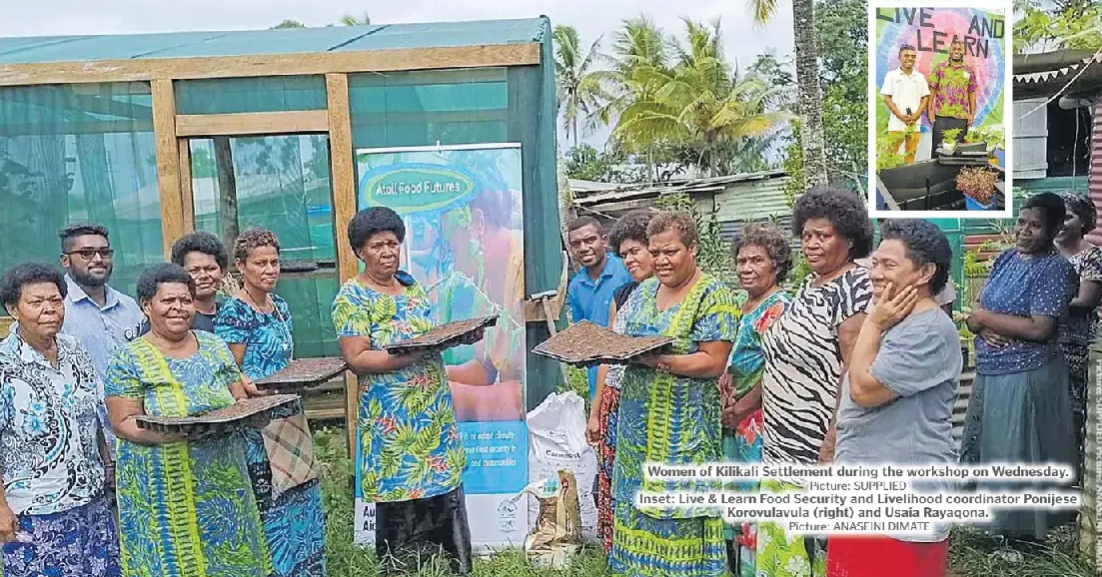
Residents of Kilikali Settlement plant seedlings during a workshop as part of the project by Live & Learn on Wednesday.

IVE & Learn Fiji is a non-government organisation that has a strong history of implementing water, sanitation and hygiene projects in our communities. But they have gone a step further to help two settlements in Fiji grow their own food even though they do not own land.

Humbled to be part of the World Food Day and National Agriculture Show at the Vodafone Arena last week, the organisation works in collaboration with the Ministry of Agriculture and Waterways Fiji by supporting informal settlements in the country.

Demonstrating the purpose and the use of the raised garden bed at the Agriculture show, Live & Learn food security and livelihood coordinator Ponijese Korovulavula said with the support they receive from the Australian Government, they were able to pilot this project into informal settlements as most people living in these communities do not have land ownerships.

Mr Korovulavula said the project is called Atoll Food Futures program and its main concept is to help people living in informal settlements plant, store, grow and keep their plants. It is funded by the Australian Government Department of Foreign Affairs and Trade and implemented by Live & Learn.

The project works with community members across three countries (Fiji, Kiribati and Tuvalu) to improve the production of fresh, locally grown produce. It is designed to empower people to grow fresh healthy produce at home, through skill building, agriculture training and also by sharing indigenous knowledge surrounding home gardening and food preservation.

“We have encouraged communities to plant shallow rooted crops as it doesn’t consume a lot of water and nutrients.

This food cubes doesn’t come in land or farm sizes but people can use it as a source of food security.”

Mr Korovulavula said they are impressed by what most communities have done so far.

“Most people in the communities we’ve introduced the project to have developed an advanced way by planting seeds in the food cubes and later transferring it into other containers,” he said.

According to Mr Korovulavula, informal settlements are the ones that suffered the most from non-communicable diseases (NCDs) and this project is something Live & Learn has brought about to help reduce this issue.

“We thank the Australian Government for funding and giving us the opportunity to reach out to these informal settlements, even though they have no land ownership, this concept is a way to help them in the future.”

Mr Korovulavula added for their food cubes concept they’ve supported settlements like Kilikali in Nadawa and Waikerekere outside Lami Town. Live & Learn is committed to work with vulnerable communities to improve food and nutrition security.

Source: Fiji Sun

Date: 03/11/2023

Cabinet approves team

Cabinet has approved the formation of a National Emergency Response Team. National Disaster Management Office (NDMO) director Vasiti Soko confirmed this while delivering her closing remarks at a five-day emergency operation centre training at the Fiji Teachers Union Hall on Friday.

“This is nothing new in the disaster space globally,” she said. “Solomon Islands is the first country in the Pacific to form a National Emergency Response Team. It’s also looking at ensuring that when you are deployed, you are deployed understanding humanitarian principles. You understand the different classes that exist within you, understand the logistic plan, how to prepare well for response. All of these small things, we take for granted but they really do save lives.”

She said decision makers relied heavily on the information that came from the Emergency Operation Centres (EOCs) during disasters. “Everything is so important because as decision makers, we rely on the information that comes from you.

“So how you operate in emergency operation centers, how you work as a team, how you ensure that information is correct and verified, that comes from the district, to the divisional, to national.

“Those processes are very important to be followed because any delays between may cost a life,” she said.

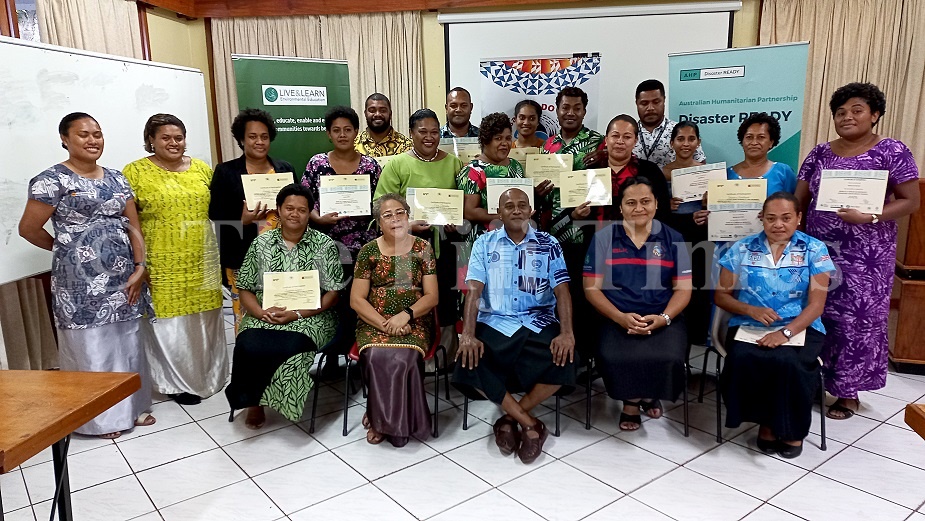
The training program was organised by Live and Learn Fiji, a recipient of Australian Government funding through the Australian Humanitarian Partnership’s Disaster Ready 2.0 program.

It was attended by representatives from the Ministry of Rural Development and Maritime and National Disaster Management, as well as other government ministries.

Source: Fiji Times

Date: 07/05/2023

CSOs, university help with pandemic recovery

Three Fijian organisations were able to assist thousands of Fijians sustainably navigate the economic challenges of the COVID-19 pandemic through funding provided by USAID.

The three were the Foundation for Rural Integrated Enterprise and Development (FRIEND), University of Fiji, and Live and Learn Environment Education Fiji.

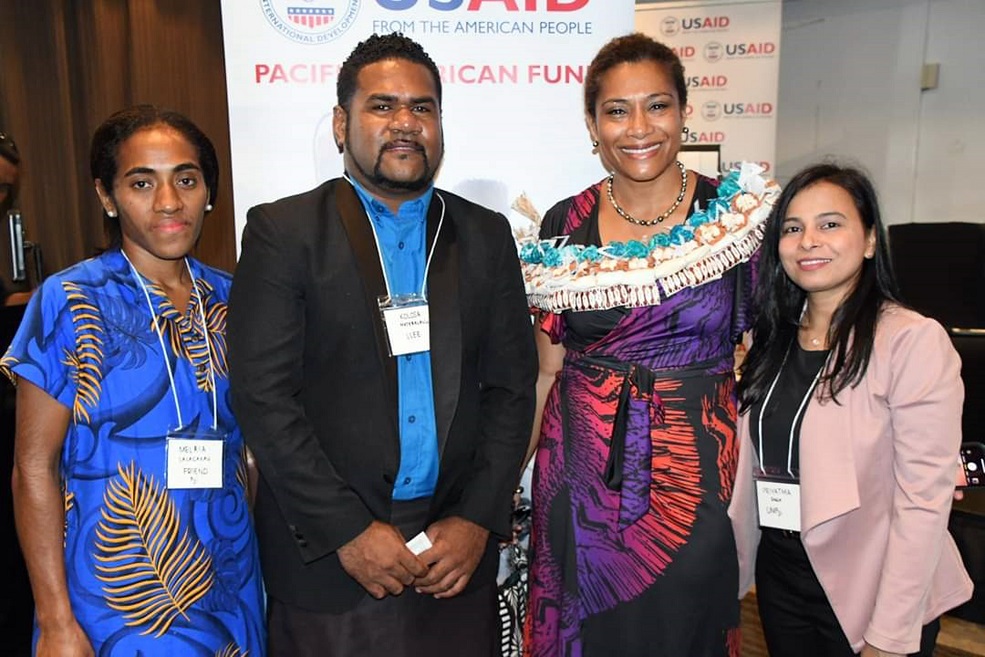
USAID grant receiptants Melaia Salacakau Project Manager FRIEND , LIVE AND LEARN Fiji Project Manager Kolosa Matebalavu, Women’s, Children and Poverty Alleviation Minister Lynda Tabuya and University of Fiji Lecturer Priyatma Singh at the USAID Pacific American Grant Award Spotlight Event on Tuesday at the Grand Pacific Hotel. Photo: Fiji Government

FRIEND project manager Melaia Salacakau said with the funding, they were able to increase skills for 2300 Fijians through seven livelihood training programs.

“So the different livelihood schemes training (and) intervention that we put together was soap-making training, oil efficient training, food processing activity, food production, compliance training, seafood processing training and sea salt training,” she said.

She said they targeted areas such as Sigatoka, Nadi, Lautoka and the Yasawa Group as they were heavily reliant on the tourism industry.

Ms Salacakau said during the COVID-19 pandemic, the livelihood training greatly assisted people in terms of earning an income and eventually supporting themselves.

“Some of them have been have been selling overseas to family and friends as well as in their community.

“As for the sustainability of the project, FRIEND is putting together an e-commerce platform where all the beneficiaries will be able to sell and market their products globally.”

The University of Fiji, the only grant recipient outside of the NGO and CSO space, worked with two communities in reviving their aquaculture farms for tilapia farming.

Lecturer Priyatma Singh said they noted that during the peak of the pandemic, food security became a concern. They had a non-functioning pond which the university decided to revive through the American Pacific Grant.

“So it’s not just this training centrally, of course, we helped them to upgrade their skills but they also with resources and some very important equipment that was needed for them to sustain the pond,” Singh said.

“So we provided them with the training in a pond preparation activities. We also provided training with the feeding, with harvesting, financial literacy, provided them with the trainings marketing as well.

“One of the other things we have done is incorporated the outcomes of the project into our Environmental Science course at the university.”

Live and Learn Environment Education Fiji project manager Kolosa Matebalavu said they received the grant under the disaster risk management area.

He said through their community programs they realised that the one-size-fits-all approach did not work as it never addressed the needs of everyone in the community.

“When we’re talking about communities that have different groups of people that live in our communities, they have different needs, they have different capacities, they have different strengths and most of the time when we take a one-size-fits-all approach, that’s how people get mixed up, don’t respond to their needs,” he said.

The USAID grants have a duration of 12 to 20 months and are divided into two categories; the small NGOs and CSOs eligible for a funding of up to $US150,000 ($F327,000), while the more experienced NGOs are eligible for a grant ranging from $US300,000 ($F654,000) to $1 million ($F2.18m).

The grant started in August 2020 as USAID assisted Pacific Island countries in their fight against the impacts of Covid-19.

USAID, through various means, has provided Fiji with up to $122 million worth of assistance to combat the negative impacts of the pandemic.

Source: Fiji Times

Date: 10/02/2023

NZ to provide further support to CSOs to assist affected families in Fiji

The New Zealand High Commissioner to Fiji Jonathan Curr has announced that they will continue to support civil society organizations to assist vulnerable families in Fiji during the COVID-19 outbreak.

This follows the announcement by the New Zealand Minister for Foreign Affairs Nanaia Mahuta in June that they will provide up to $7 million to local CSOs.

The six civil society organisations are Empower Pacific, Frank Hilton Organisation, FRIEND Fiji, Live and Learn Fiji, Pacific Disability Forum and the Sai Prema Foundation.

Curr says they will be scaling up assistance in communities through the provision of food rations, psycho-social support, personal protective equipment, improvement of nutrition, health, hygiene and sanitation, improved food security, medical support, capacity building and sustainable livelihoods.

He says the target beneficiaries include children, female-headed families and people with disabilities who stand to be most affected by the social, economic and health impacts of the pandemic.

Curr says they have worked with CSOs to support social inclusion and provide tangible assistance to the many households impacted by COVID-19 and they are delighted to extend the partnership.

He adds these organisations have strong networks at a grassroots level and their community-driven approach has helped them identify and respond to needs effectively.

Curr says the CSO partners will be supporting families Fiji-wide however there will be a strong focus on delivering assistance to affected communities in the Central and Western Divisions.

Source: FijiVillage

Date: 19/08/2021

78 families residing in Newtown Hart receive assistance from Live and Learn Fiji

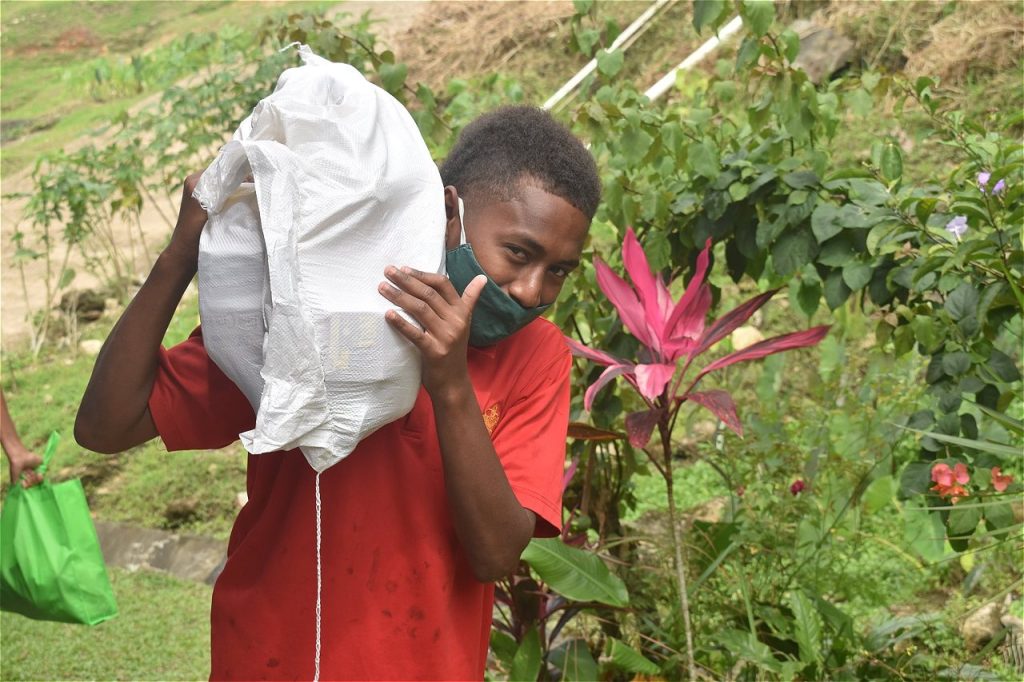
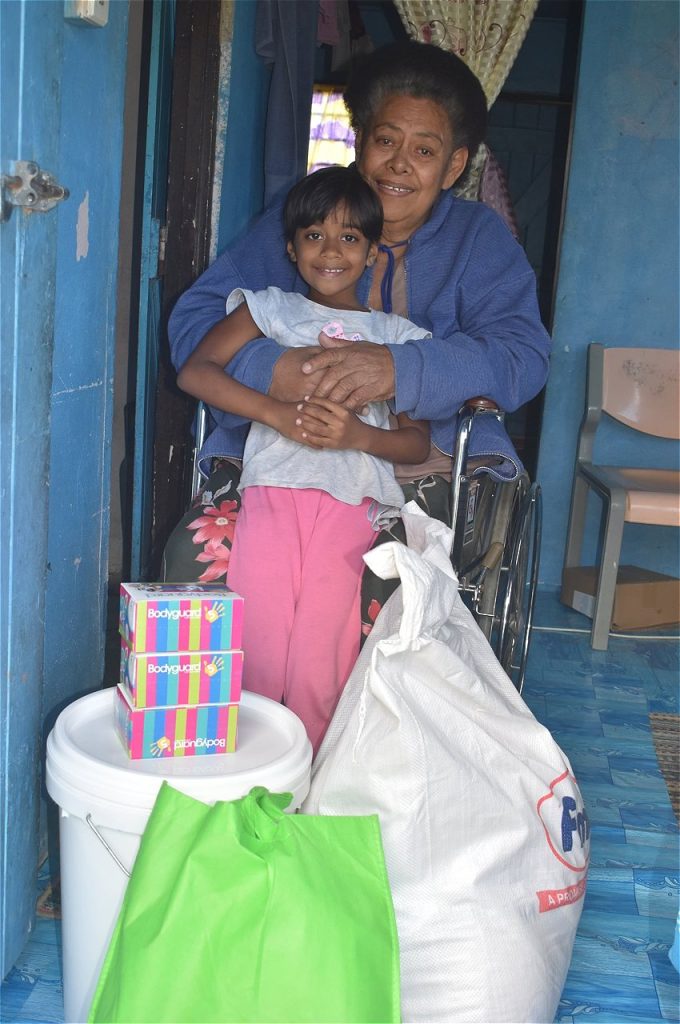
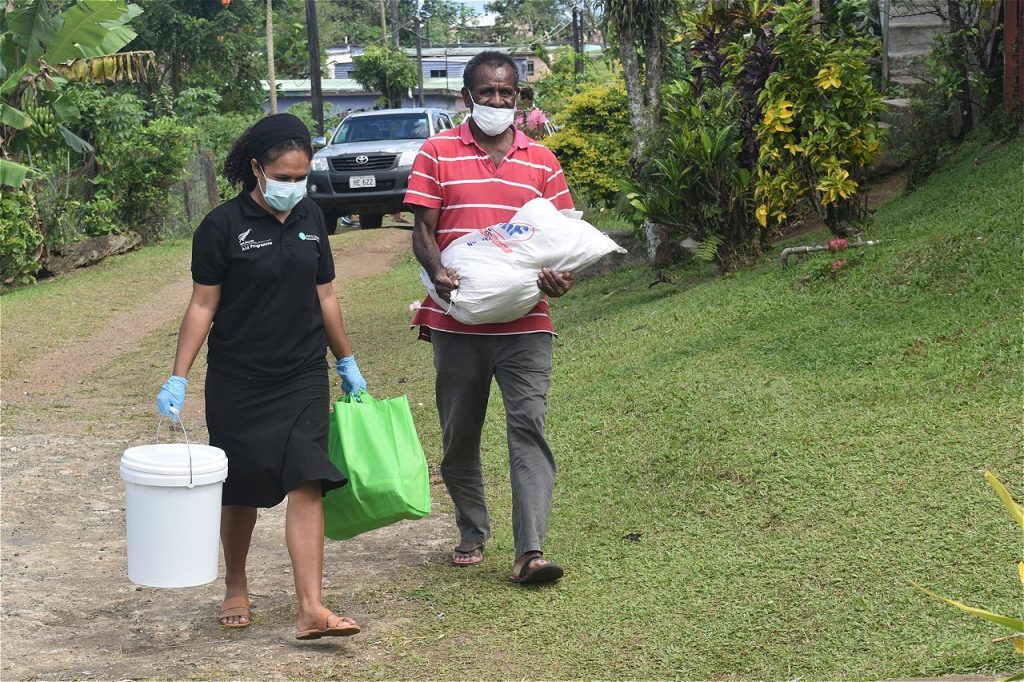
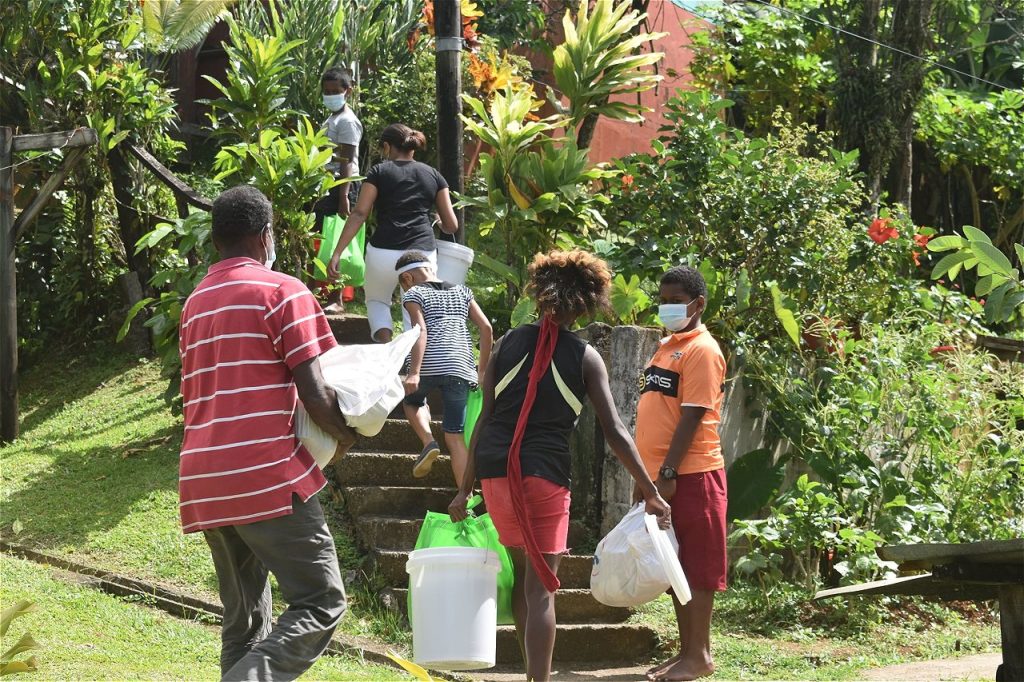
78 families living at the Newtown Hart in Suva have received assistance packages from the Live and Learn Fiji organisation.

The assistance is funded by the New Zealand Ministry of Foreign Affairs and Trade.

Each family received food ration packs, hygiene and washing kits.

One of the recipients was 67-year-old Sera Mataika Ratu and her 8-year-old granddaughter.

The Social Welfare beneficiary who is wheelchair-bound was emotional when receiving the assistance and says it has brought relief to them in this unfortunate time.

Ratu says they are thankful to Live and Learn and its partners for responding to their needs.

The initiative is in collaboration with the Ministry of Agriculture, the Ministry of Health, the RFMF, Empower Pacific and the Fiji Disabled People’s Federation

Source: FijiVillage

Date: 01/09/2021

UN CERF Supports IOM Response to Tropical Cyclone Harold Devastation in Fiji

Date: 13 November 2020

Tropical Cyclone Harold caused extensive destruction after making landfall as a category 4 storm in the Republic of Fiji on 8 April 2020.

Since then, International Organization for Migration’s partnership with the Fijian NGO Live and Learn has supported the ongoing rebuilding efforts by responding to the shelter needs of some of the most vulnerable households affected by Tropical Cyclone Harold (‘TC Harold’) in Vatulele island and Tailevu province (Western and Central Divisions respectively).

To address the shelter, water and sanitation and food security needs of 200,000 people affected, the UN Central Emergency Response Fund (CERF) contributed USD 100,000 to the IOM’s response.

The Category 4 cyclone, which left a trail of destruction in its path with average winds of up to 195km/hr and gusts up to 275km/hr caused substantial damage to dwellings, livelihoods, and critical infrastructure across the country. The devastation caused by the cyclone was followed by heavy rains for several weeks, which added flash flooding damage to the widespread destruction.

The humanitarian response was further impacted by COVID-19 lock-down measures, including national travel restrictions on all inter island transfers which limited access to cyclone affected areas.

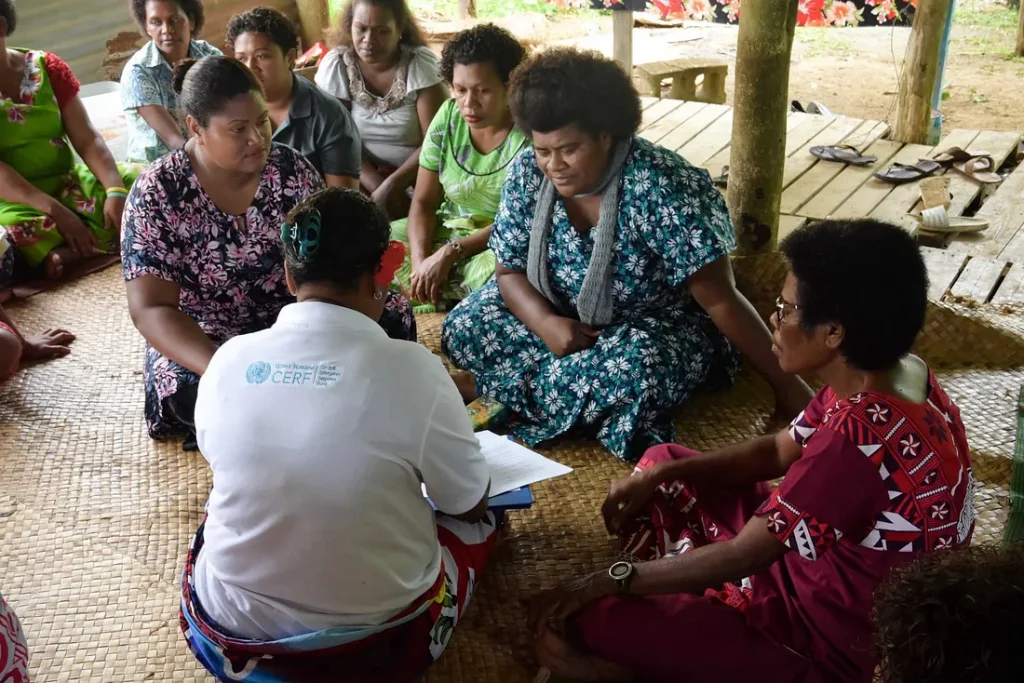
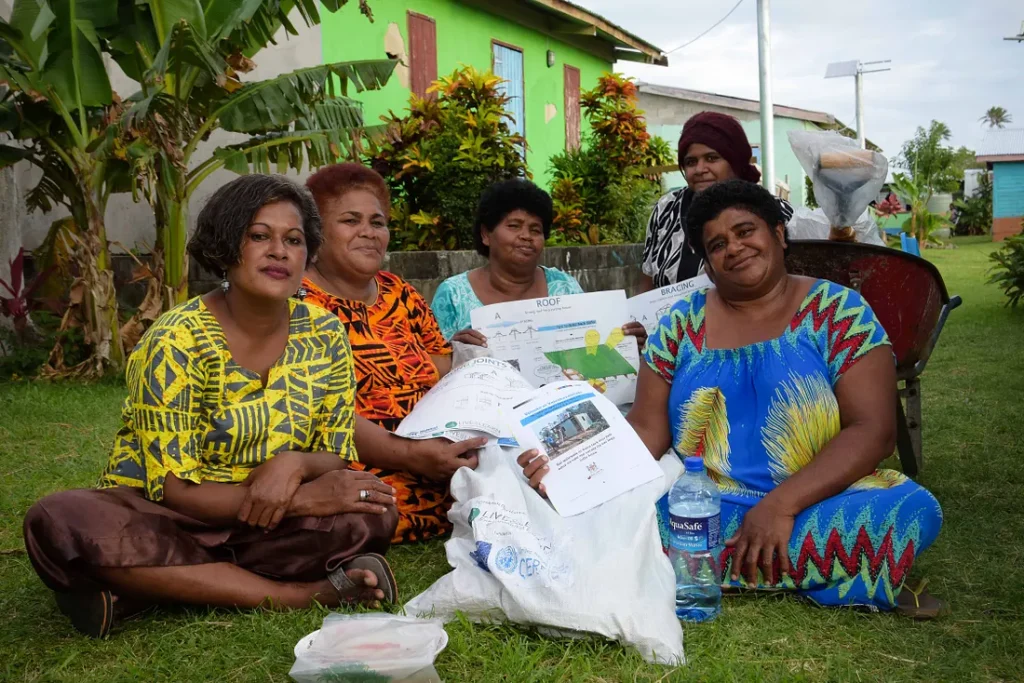
A total of 464 households whose shelters were damaged in the Western and Central Divisions are receiving the supplies necessary to rebuild their homes. They are also participating in a Build Back Safer (BBS) training which trains people on building techniques, the identification of safe building locations and how to use locally available materials in conjunction with the items and tools included in the repair kit to rebuild their homes.

According to Vusuya Settlement’s community representative, “learning about how to strap roofs using the material provided is really important as most houses were roofless after TC Harold.”

Source: IOM Website

Link: https://medium.com/@UNmigration/un-cerf-supports-iom-response-to-tropical-cyclone-harold-devastation-in-fiji-593e415eb6cd