
Climate resilience with Vetiver grass planting
Resilient Communities
Nature based Solutions (NbS)
Climate resilience
Food preservation
Disaster Risk Reduction
Gender & Social Inclusion
Empowered communities
Resilient Communities
Nature based Solutions (NbS)
Climate resilience
Food preservation
Disaster Risk Reduction
Gender & Social Inclusion
Empowered communities
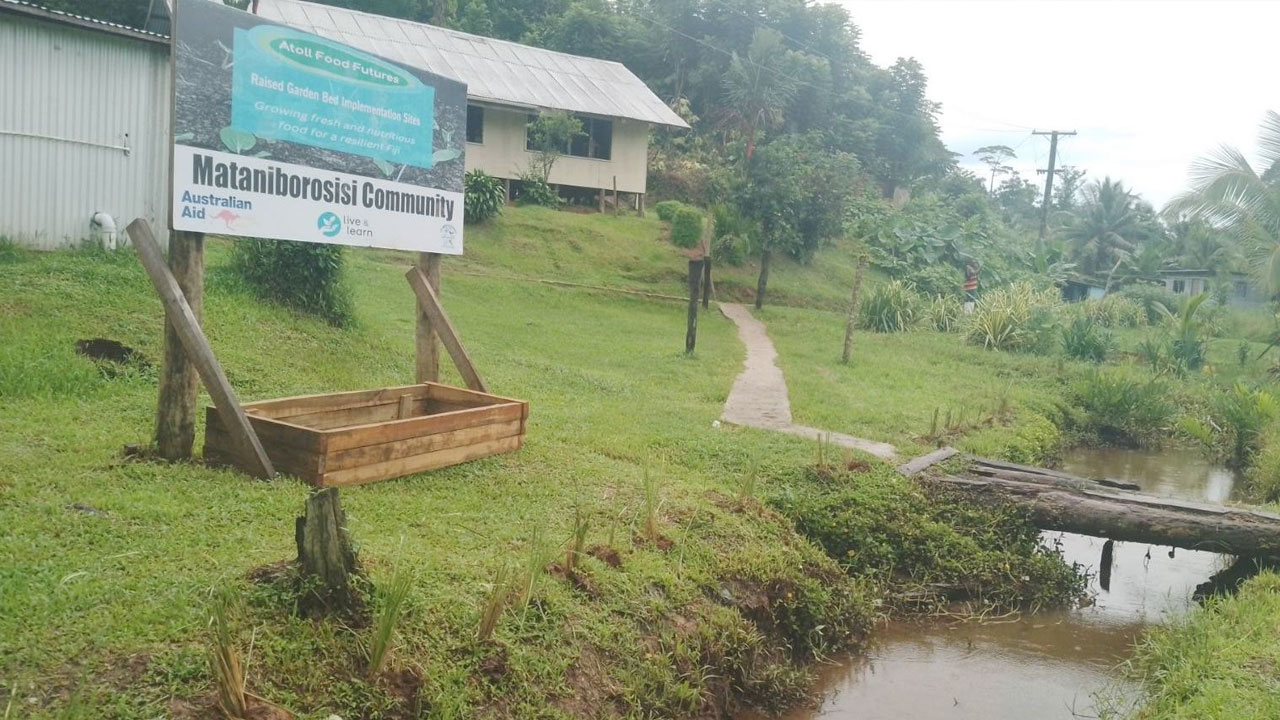
The Ministry of Agriculture and Waterways and Live and Learn Fiji are spearheading the Atoll Food Futures program.
It focuses on the strategic planting of Vetiver grass to counteract the adverse impacts of climate change on the environment.
The initiative primarily targets informal settlements including Kilikali, Mataniborosisi, Waikerekere and Bilo along the Suva corridor where communities deal with numerous challenges stemming from erratic weather patterns.
The Ministry’s land use section is at the forefront of efforts to address soil erosion and stabilization.
Utilizing Vetiver grass known for its ability to form dense narrow edges when planted closely, the approach has proven effective in controlling soil erosion and stabilizing watercourses.
Originally developed over 50 years ago for Fiji’s sugar industry, the use of Vetiver grass has become a standard practice for soil and water conservation, particularly in small-scale farming and residential compounds.
Vetiver grass finds widespread application across Fiji from reinforcing road embankments to stabilizing stream banks and contour hedges in farmland.
Farmers routinely employ Vetiver to fortify farm roads, regulate runoff water and shield vegetable crops from erosion.
Acknowledging climate change as an enduring natural occurrence, the collaboration highlights the necessity of nature-based solutions such as Vetiver grass to combat its effects.
Source: FBC News